
Listen on YouTube // Apple // Spotify
Thank you to our sponsor partner:

Nooks just announced $500M in growth capital from General Catalyst! Discover how revenue agents can transform your GTM at https://nooks.ai/gtmfund
Outbound sales today is still built around manual work: writing emails, building lists, and managing sequences across disconnected tools.
Nooks is breaking the mold. With their AI Sequencing product, Nooks is an agent workspace where AI works alongside reps, helping them understand accounts, prioritize the right prospects, and generate context-rich outreach based on actual first-party interactions.
No more wasting time in multiple tools – it’s one unified workspace for all your outbound channels. Arm your sales team with intelligent outbound.
Who you’ll learn from
Robert Brooks has been selling compute at Lambda since 2018, back when he had to convince buyers to use GPUs at all. Today he’s Lambda’s Chief Commercial Officer and closes 11-figure contracts. He’s also a GTMfund LP.
In this live conversation from the GTMfund AGM, Robert shares a close-up view of where AI infrastructure demand is going. He covers who’s buying compute now, why 5,000 new companies sign up for Lambda every month, how his team picks customers the way a VC picks deals, and why he thinks GTM skills are about to become more valuable than ever.
What you’ll learn
Who’s buying compute now that wasn’t a year ago, and what they’re asking for
- How the buyer persona shifted from machine learning engineers to founders and “heads of compute”
- Why selling compute now feels like a venture bet: selecting the right customer to scale with
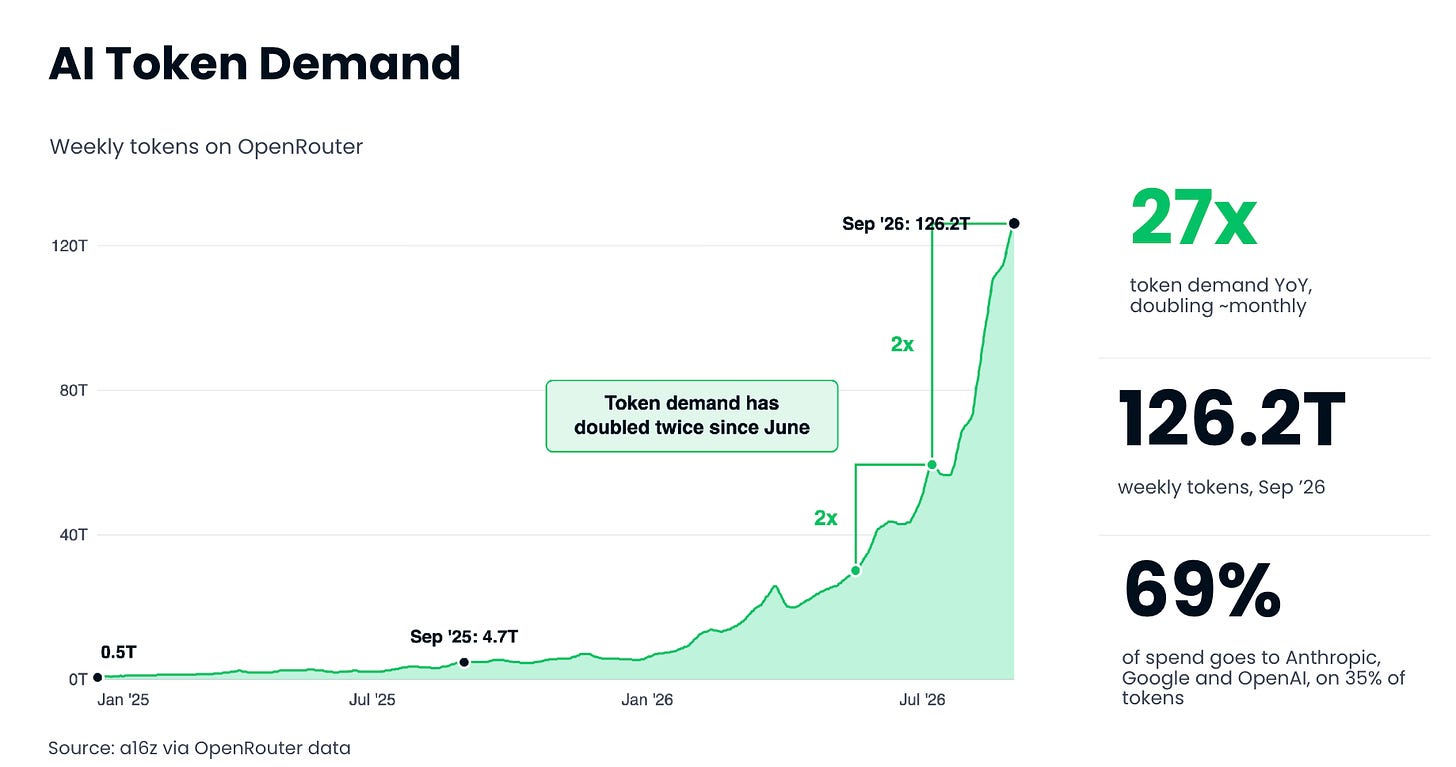
- What Lambda’s deal flow (5,000 new signups a month) says about where demand is heading
- Why agents, AI platforms, and even agent-driven CPUs are the verticals taking off
- Robert’s advice to go-to-market operators: “if anyone can build anything, who’s going to sell it?”
- His favorite personal agent use case: getting up to speed on any industry in ~45 seconds before a meeting
- The office robot, and how small automations change a 50-person office
Episode highlights
0:44 – Introducing Robert Brooks, CCO of Lambda and GTMfund LP
1:50 – What Lambda is, and the road from workstations to agent swarms
2:52 – Who’s buying compute now, and how the persona shifted
5:14 – The new buyers: founders, heads of compute, heads of data center construction
6:39 – Where demand is heading: the greatest deal flow in AI history
7:55 – Why you can only predict about a week out
8:09 – The curveball: SpaceX vs. Anthropic vs. OpenAI
9:38 – Advice to go-to-market operators in the AI era
11:05 – Robert’s favorite personal agent use case
12:13 – The office robot he bought with leftover marketing budget
Key takeaways
1. The compute buyer has moved up the org chart.
In 2018, Robert had to convince buyers to use GPUs at all. Back then he sold to ML engineers. Today he sells to founders at AI-native companies and to new titles like head of compute and head of data center construction, and he closed an 11-figure contract in the last three months. One rule hasn’t changed: sell to whoever has real economic power. Back then, if the ML engineer said yes, the deal happened even when a VP said no.
2. Selling compute now works like venture capital.
With 5,000 new companies signing up every month, which Robert calls the greatest deal flow in AI history, his team spends less time hunting and more time choosing. Capacity is limited, so the real question is which business models will scale and deserve that supply. He knows the position won’t last forever: in 2024 Lambda had a GPU glut it couldn’t give away, and he expects more booms and busts.
3. Demand is changing faster than anyone can forecast.
Robert is most excited about vertical AI, like a drug-discovery startup going after one narrow molecular problem. The surprise is that agents run on CPUs, so Lambda is now deploying hundreds of thousands of them, which he didn’t see coming a year ago. His view on forecasting: if you can predict next week, you’re insane.
4. If anyone can build anything, who’s going to sell it?
As AI makes building easy, the scarce skill becomes selling: building relationships, earning trust, and convincing someone you’re not bullshitting them. He argues no machine will ever have that, so the value of GTM talent will go parabolic over the next decade.
5. A key AI unlock: go from zero to expert in 45 seconds.
Robert meets with people in manufacturing, then bio, then semis customers, so he uses prompts to get up to speed on each industry in about 45 seconds, sometimes mid-meeting. He’s surprised how many of his reps don’t do this.
Bonus: Lambda’s best-performing hire might be a $40K robot that clears everyone’s desks, so nobody has had to send a “wash your dishes” reminder since!
Robert Brooks
- LinkedIn: https://www.linkedin.com/in/boborado
- Lambda: https://lambda.ai
- Lambda’s Career Page: https://lambda.ai/careers/open-roles
Sophie Buonassisi (Host)
- LinkedIn: https://www.linkedin.com/in/sophiebuonassisi
- X (Twitter): https://x.com/sophiebuona
- Newsletter:
GTMnow
- LinkedIn: https://www.linkedin.com/company/gtmnow
- X / Twitter: https://x.com/GTMnow_
- YouTube: https://www.youtube.com/@GTM_now
- Instagram: https://www.instagram.com/gtmnow_
- TikTok: https://www.tiktok.com/@gtmnow_
The GTMnow Podcast – subscribe to support
It would mean the world to us if you subscribe to the show on your platform of choice. This helps support our growth, which in turn helps us continuously bring on bigger guests and deliver the content that you want to hear most.
The GTMnow Podcast shares how the best in tech build, scale and invest.
Visit gtmnow.com for more episodes, The GTMnow Newsletter editions, and other content.
The media brand, GTMnow, shares how the best companies get built, told from every perspective: founders, operators and investors, at every stage of company building. GTMnow is owned and operated by VC firm, GTMfund.
GTMnow 212 Full Episode Transcript
00:00 – 00:06
Robert Brooks: If anyone can build anything. Who the fuck is going to sell it? We are. We are going to sell it. Robert Brooks.
00:06 – 00:07
Sophie Buonassisi: Chief commercial officer at Lambda.
00:07 – 00:15
Robert Brooks: There’s nothing really new about Lambda. Lambda has been around since 2012. There’s 5000 new companies that sign up for our platform on a monthly basis.
00:15 – 00:22
Sophie Buonassisi: Let’s say you got ten grand. You can spread it. Any kind of ratio you want across space. Anthropic or open AI. Where are you putting the money?
00:22 – 00:23
Robert Brooks: Wow.
00:23 – 00:43
Sophie Buonassisi: Are those secretly AI glasses? Very stylish one, Gregor. Observing the real time. Yeah.
00:43 – 01:05
Sophie Buonassisi: Our Roberts is the chief commercial officer at Lambda. One of the companies providing compute behind the AI boom. He’s incredibly close to all the AI infrastructure that is being committed right now and has that really, really interesting close perspective on it. He’s also a GTM fund LP. We’re incredibly grateful for him and happy to be sitting here on stage with you, excited to dive in.
01:05 – 01:23
Robert Brooks: Thank you so much, Sophie. Before we get started, I wanted to personally thank you. And thank you so much to Paul. Thank you so much to Max. There’s been two ways that GTM fund is really, like, affecting me in such a positive way. One, I made my number two higher in my organization from this community, just from putting it out on slack.
01:24 – 01:46
Robert Brooks: That type of like, value is insane. This is my number two guy, right? Former head of sales operations at slack. Now my head. Go to market operations at Lambda. Incredible value add. Number two. Got to got to do a podcast with you folks a couple of years ago. And and that helped validate so many ideas that I had stuck in my head and get it out there in the world.
01:46 – 01:50
Robert Brooks: And it was really fun to just have those opportunities. So thank you guys for that.
01:50 – 01:59
Sophie Buonassisi: Appreciate you sharing that. And it is our absolute honor and pleasure. Now, for anyone unfamiliar with Lambda, give us a call in a couple sentences. Bit of an overview of Lambda and your role there.
02:00 – 02:05
Robert Brooks: Yeah. So we all wear white glasses and we all wear white seersucker suits.
02:05 – 02:07
Sophie Buonassisi: Very stylish.
02:08 – 02:26
Robert Brooks: And the shoes are from Portugal, so you just gotta, you know, anyway, so we’re, we’re, we’re a neo cloud as it’s known. I don’t necessarily love that framing, but it is what it is. You kind of have to lean into it these days. There’s nothing really neo about Lambda. Lambda has been around since 2012. In fact, I joined before AI was a thing that was commonly said.
02:26 – 02:50
Robert Brooks: It was very cringey in 2018 to say AI. It was machine learning. It was deep learning. So today we built superintelligence. Sorry, supercomputers for superintelligence. Big, massive data centers, hundreds of thousands of GPUs. We started building gamer workstations with a little bit of software on top. And now we’re here today managing fleets, you know, running some of the biggest agent swarms in the world.
02:50 – 02:51
Robert Brooks: So it’s been a lot of fun.
02:51 – 02:58
Sophie Buonassisi: That is that. And so who’s buying compute now that maybe wasn’t say a year ago. And what are what are they asking for.
02:58 – 03:23
Robert Brooks: I think the dude working at the hotel is buying compute. Like everybody’s buying compute, right? And so, like, you know, honestly, this market in 2018, I had to convince our buyers to use GPUs, which is sort of an insane statement today. So there’s a lot of inbound demand, and my team is much more less on the Hunter side, much more selecting the right customer to grow with and scale.
03:23 – 03:42
Robert Brooks: Right. And so when you look at a business model of any company, like in this portfolio or in general, it’s adopting AI and needing to use GPUs, not just relying on an API. It’s certainly about your business model and how you’re going to scale that business model. And us having a limited capacity of something and wanting to scale that with you because we think you’re going to be big.
03:42 – 04:04
Robert Brooks: So it’s almost like this venture capital take on like selecting a customer. Now it’s a privileged position to be in. And certainly it’ll change in 2014 and 2024. We had a glut of GPUs and couldn’t figure out a way to give them away. So there would be busts and booms here. But ultimately our buyers consist of obviously inference providers that are out there that do really, really exceptional work.
04:04 – 04:27
Robert Brooks: I’m sure some of you in the room, maybe your engineering teams have used our platform in some sense the big frontier, AI labs, the hyperscalers, hedge funds. This is predominantly where I spend my time. And the actual like the persona is, is what’s really changed for us. So we used to sell to machine learning engineers who, as you know, meta hires them for $1 billion.
04:27 – 04:51
Robert Brooks: These days, these guys have a lot of academic pool. They can just make a decision in the business moves towards it. That taught me something really early on in my go to market career, in terms of selecting a user profile to build towards, they have power, the machine learning engineer, and so they can make, you know, maybe a VP said no, but if the machine learning engineer said yes, the deal happened.
04:51 – 05:12
Robert Brooks: So that’s still generally true today. But today it’s obviously in a much bigger stage. Deals are in the billions of dollars. I’ve done a 11 figure contract in the last three months. Wow, that’s a lot of zeros. My my hairline is now further back. My waistline is now further out. That’s a true story, by.
05:12 – 05:13
Robert Brooks: The way.
05:14 – 05:31
Robert Brooks: But like, so we’re now at the sort of, like, founder level when we’re, you know, selling to AI natives and we’re at the sort of like, head of data center construction and head of compute. These are titles that didn’t exist ten years ago. Well, data center did the head of compute didn’t really do at at major companies.
05:31 – 05:36
Robert Brooks: So the titles really shifted, the persona shifted the buying classes really shifted.
05:36 – 05:37
Sophie Buonassisi: A quick pause.
05:37 – 06:00
Sophie Buonassisi: If you run outbound sales, this is big news. Most wrecks are bouncing between five different tools just to send one email, but there’s a better way. Nux is the AI agent workspace built for intelligent outbound, where AI agents and your reps work together in one place. Nooks AI sequencing handles the busy work finding prospects, writing outreach, knowing who to contact, and when so your team can focus on actual conversation.
06:01 – 06:10
Sophie Buonassisi: If you’re evaluating your outbound stack or renewing legacy tools, check out nooks.ai. That’s no s.ai.
06:10 – 06:25
Sophie Buonassisi: It’s shipped at a ton. You mentioned there can be some lumpiness to it. You have purview to who’s actually buying compute long before. Typically, you know, many of us see it on the product side. What is what you’re seeing, telling you about where the demand is heading overall?
06:25 – 06:43
Robert Brooks: Yeah, I mean, in terms of venture, I, I would say that we have the greatest deal flow in the history of AI. There’s 5000 net new companies that sign up for our platform on a monthly basis. Extreme amounts of demand. Right. The number one thing that we’re seeing that we’re really liking from, from from startups, from true startups, right?
06:43 – 07:05
Robert Brooks: Not just a startup that raises a $2 billion seed round, is the vertical line of, of AI agents or just like an AI platform in general. So drug discovery in a particular sort of like molecular approach to solving something very small if they’re applying in path towards that, you know, that’s a really cool thing that we’re seeing that’s really starting to take off.
07:06 – 07:22
Robert Brooks: The agents thing, like obviously all over the place, very, very big on that. Believe it or not, agents within CPUs. So our businesses change as well. We’re now deploying hundreds of thousands of CPUs. Didn’t think we’d be doing that a year ago. So, I, I think the, the quote from like, if you can predict the future today, you’re insane.
07:22 – 07:26
Robert Brooks: Like you can predict next week. You know.
07:26 – 07:27
Sophie Buonassisi: If you could predict next week, what would it.
07:27 – 07:39
Robert Brooks: Be next week? I hope that it’s not 95 degrees in San Francisco. That’s what I get or that’s what I hope. But honestly, I think next week we’re going to find out a little bit more about anthropic IPO.
07:39 – 07:45
Sophie Buonassisi: Yeah, yeah. Very true. I mean, with that in mind, I have a little bit of a curveball question for you.
07:45 – 07:47
Robert Brooks: Here we go. Robert.
07:47 – 07:57
Sophie Buonassisi: Hypothetical question. Let’s say you’ve got ten grand. You can spread it. Any kind of ratio. Do you want across space anthropic or open AI. Where are you cutting the money.
07:57 – 07:59
Robert Brooks: Wow.
07:59 – 08:26
Robert Brooks: Well, I guess space is the only one that’s public, right? So I’d have to find my way into a an Spvs stacked onto an SPV, stacked onto an SPV to get into an anthropic ground. Probably. Right. All kidding aside, I mean, all three of them are just generally generationally amazing companies. And I have to be biased because I’m an unbiased platform, so it’d be a clean 3333 split.
08:26 – 08:26
Robert Brooks: 3330.
08:26 – 08:27
Robert Brooks: 230.
08:27 – 08:46
Robert Brooks: Three split between all three of them. Massive respect for all of them. I love the open approach towards consumer. I love the cloud approach towards enterprise in a specific software domain, in the space element of like building data centers, actually in space. However insane that sounds like. I almost like, you know, spit up when I heard that idea six months ago.
08:46 – 08:54
Robert Brooks: I totally believe in that idea now. It’s going to be generational. Space is big. It’s going to be fun, and it’s free energy.
08:54 – 08:58
Sophie Buonassisi: That’s a very investment forward approach that they’re going through.
08:58 – 09:01
Robert Brooks: A I have to be unbiased in that answer.
09:01 – 09:05
Sophie Buonassisi: Yeah, yeah. That was my guess of what you say and probably a friend. But how we would do two. But I had to.
09:05 – 09:08
Robert Brooks: Ask it would be.
09:08 – 09:24
Sophie Buonassisi: Now we’ve got a room full of many go to market operators here yourself reliving the commercial side of Lambda. What kind of advice are you giving your team, and are you seeing other go to market leaders finding value in on the go to market side, given every single on his AI?
09:24 – 09:25
Robert Brooks: Okay, so.
09:25 – 09:40
Robert Brooks: In general, I think that the people in this room, in the skill sets that we have are going to be the most important thing in the next ten years, bar none. If anyone can build anything, who the fuck is going to sell it? Sorry we.
09:40 – 09:42
Robert Brooks: Are, we.
09:42 – 10:02
Robert Brooks: Are going to sell it. That skill set that you have that you may not even know that you have, that you were born with, is one of the most important things is going to completely take over this Silicon Valley, maybe a superintelligence valley. And I think the the demand and the value of our skill sets are going to go.
10:02 – 10:04
Robert Brooks: Parabolic.
10:04 – 10:24
Robert Brooks: To sell, to build relationships, to build trust, to get someone to convince you, I’m sorry, to convince someone, that you are not bullshitting them. Is is a property that a 0 to 1 bit will never have? We have it. It’s in our DNA. The people in this room are some of the best people ever to do it.
10:24 – 10:26
Robert Brooks: That’s my advice.
10:26 – 10:36
Sophie Buonassisi: That is fantastic advice and very promising for everyone in this room. Last question for you, Robert. What is your favorite personal agent use case right now?
10:36 – 11:03
Robert Brooks: So my my world is is sort of shifted in so many domains. I don’t I don’t get to verticals in a particular area of focus. I have to be platform agnostic. So one time I’ll meet with a customer in manufacturing. They’ll meet with a customer in bio. They don’t meet with a customer and semis. So I’m still at the prompting stage of like just having to, in real time, get up to speed on everything that these people are doing, basically while I’m in a meeting with them, especially if it’s virtual.
11:03 – 11:10
Robert Brooks: And so I think that’s an incredible unlock. If you remember selling back in like before these times, if you didn’t have a prep doc, you were.
11:10 – 11:11
Robert Brooks: Screwed.
11:11 – 11:26
Robert Brooks: Like you had to Google, and then maybe you’d find the link and you would just you would not show up in a meeting. Knowing what an expert you can quickly turn around in about 45 seconds and sound like an expert with a prompt. That’s a key unlock. And it’s so simple and I see my reps not doing it.
11:26 – 11:36
Robert Brooks: But honestly, if it’s right there at your fingertips, take it. So for me, that’s like how I utilize agents the most. And they’re not really agents. It’s so that the prompting stage that right of that.
11:36 – 11:36
Robert Brooks: Right now.
11:36 – 11:42
Sophie Buonassisi: Are those secretly AI glasses. Very stylish one. Right. You’re observing this in real fun.
11:42 – 11:43
Robert Brooks: Yeah, I have.
11:43 – 12:00
Robert Brooks: Had, I think that one thing I have had the pleasure of getting a tune to is having a robot. So we have I use I have $40,000 left over my marketing budget. A couple of years ago, I bought a robot. We have a machine learning team that programed it, and we got it to do things that we didn’t want to do.
12:00 – 12:01
Robert Brooks: I don’t want to.
12:01 – 12:02
Sophie Buonassisi: How tall is this robot? Let’s get a visual.
12:03 – 12:03
Robert Brooks: Yeah, it’s about.
12:03 – 12:23
Robert Brooks: Like five. Two. Okay. Yeah, maybe it’s shorter than that. Maybe it’s like 410. But. But we program is robots. Like, literally just like, take the trash off our desk. And I can’t begin to explain how important it is when you have 50 people working in office, like a robot doing that for you all of a sudden, like, things are just more tidy, like you, you know, they’re just like, yell at anyone.
12:23 – 12:38
Robert Brooks: No one has to be like a PSA that you should, like, wash your dishes. Like this rule about was doing it. So I think, like all of us are going to be able to experience that in the next coming years, and it’s going to be a very, I think, cool thing to to come into our everyday lives.
12:38 – 12:45
Sophie Buonassisi: Very cool where we are going to need a picture of the robot while you’re not taking the self. We need that picture of the robot sometime. You got it. Awesome, Robert, thank you so much.
12:46 – 12:46
Robert Brooks: Thanks everybody.