
Listen on YouTube // Apple // Spotify
Thank you to our sponsor partner:

Outbound sales today is still built around manual work: writing emails, building lists, and managing sequences across disconnected tools.
Nooks is breaking the mold. With their AI Sequencing product, Nooks is an agent workspace where AI works alongside reps, helping them understand accounts, prioritize the right prospects, and generate context-rich outreach based on actual first-party interactions.
No more wasting time in multiple tools – it’s one unified workspace for all your outbound channels. Arm your sales team with intelligent outbound. Learn more at https://www.nooks.ai/gtmfund
Who you’ll learn from
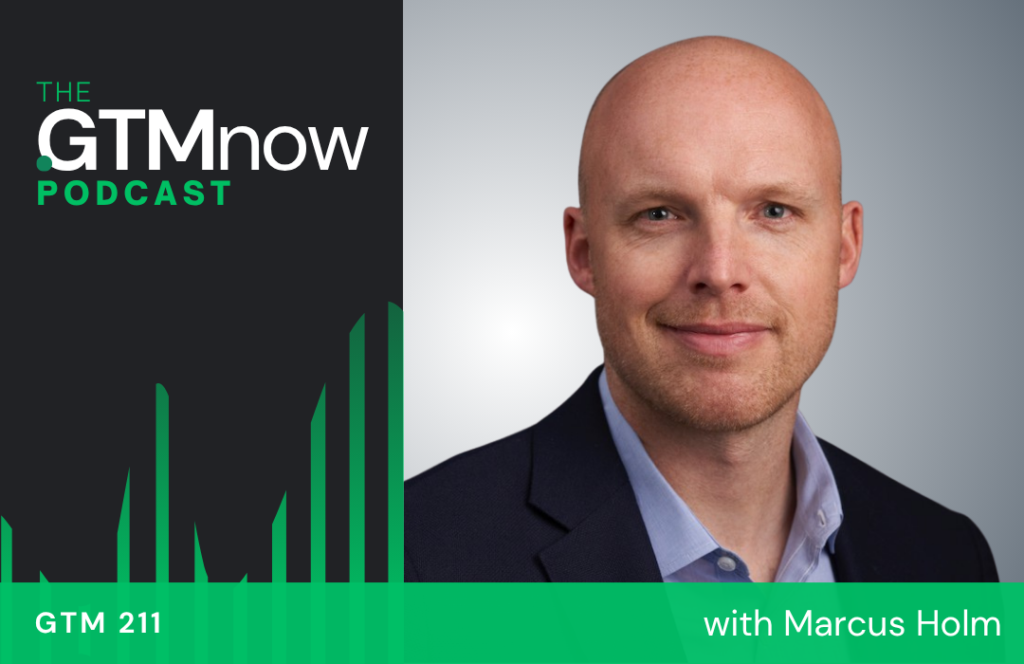
Exa just passed $100M ARR, growing nearly 10x per year for almost three years. Marcus Holm, Chief Revenue Officer there after serving as President at LaunchDarkly, breaks down how a company building “what Google is for humans, but for AI agents” scaled that fast.
Marcus explains why he describes Exa as Google search for AI agents, why co-founder Will’s prediction (that 2026 would be the year agents search more than humans) came true, and what that shift means for SEO, ads, and the role of the salesperson. He gets tactical on selling to developers who don’t want to be sold to, building a consumption-based comp plan where “the sales cycle never stops,” why executive level alignment and multithreading decide most deals, and how he hires and ramps reps in a market where go-to-market talent is harder to find than engineers.
What you’ll learn
- Why Marcus joined Exa: the criteria he uses (market size, likelihood of winning it, culture, voice of the customer)
- Why over half of web traffic is now agents and bots, and what that does to SEO and ads
- What Exa is in one line: “what Google is for humans, Exa is for AI agents”
- How the salesperson’s role shifts in a bottoms-up, consumption world (from selling to being a “jungle guide”)
- Who the real customer is when agents search: the human, the agent, and the company paying the bill
- How to structure comp in a consumption model, where “you’re always on trial”
- The secret to selling to developers: curiosity, credibility, and earning the right before pitching
- The three attributes Exa hires for (humility, urgency, agency), and why he watches the first 1-2 weeks
- His favorite interview question: “share a time you overcame the odds”
- Why executive alignment and multithreading are the biggest unlocks in enterprise deals
- Why go-to-market now out-hires engineering at the top AI companies, and the AI tools his team actually uses (Devin, role-play avatars)
Episode highlights
1:12 – Welcome, and why Marcus joined Exa after LaunchDarkly
2:50 – His criteria for assessing companies: market, winner, culture
3:36 – Meeting the founders, and the “never-never land” office energy
6:16 – Passing $100M ARR at ~10x per year, and how they celebrated
7:42 – Will’s prediction: 2026, the year agents search more than humans
8:43 – What Exa is: “Google for AI agents”
9:17 – What agent search means for SEO and ads
10:20 – How the salesperson’s role changes in a bottoms-up world
11:43 – Five years out: will agents buy software on their own?
13:00 – Who the end customer really is: human, agent, and company
15:29 – Structuring comp in a consumption model
17:01 – Why consumption is the clearest form of “always be selling”
18:36 – Scaling go-to-market: the PayGo-to-enterprise motion
20:27 – The secret to selling to developers
24:42 – How to find the right salespeople (humility, urgency, agency)
27:00 – Watching the first two weeks, and how reps ramp
28:10 – How late is too late to let a rep go
29:40 – The interview question that predicts performance
31:53 – What the go-to-market looks like now, post-$100M
34:35 – Lessons from LaunchDarkly and Cloudera: tech isn’t enough
36:05 – The biggest unlock: executive level alignment
38:20 – Teaching multithreading, and why it correlates with tenure
40:38 – AI usage on the team: Devin, role-play avatars, self-serve analytics
44:05 – Why go-to-market now out-hires engineering
47:45 – The biggest surprise at Exa: decisions happen on Slack
49:05 – How agent search queries keep changing, month to month
53:21 – The most underrated GTM advice: practice what you preach
54:15 – The best advice he got: “remember who you are”
55:52 – Where to find Marcus and Exa
Key takeaways
1. Agents searching the web has officially overtaken humans, and it breaks the old monetization model.
Co-founder Will predicted 2026 would be the year agents search more than humans, possibly by 1,000 to 1 eventually, and Marcus says he nailed it: per Cloudflare, over half of web traffic is now agents and bots, and agent query volume has officially passed human volume. Exa’s one-line pitch is “what Google is for humans, Exa is for AI agents”, agents can’t use consumer Google, they need an API or MCP to run searches. The knock-on effect: agents want a clean experience (no SEO, no ads), so the ad-based search model faces an innovator’s dilemma, and Exa is betting on consumption pricing instead. Human query volume will keep shrinking as assistants do the searching for us.
2. In a bottoms-up, consumption world, the salesperson becomes a “jungle guide,” and the sales cycle never ends.
With low-friction, self-serve adoption (developers can start with no API key), the land is mostly product-led; the sales role shifts to expansion, reading adoption patterns and telemetry to tell customers “I noticed you’re doing X, have you tried Y,” and connecting them to peer use cases. Marcus frames consumption as the purest form of “always be selling”: there’s no big upfront perpetual license and sometimes no renewal event, so “you’re always on trial” and must keep earning it through SLAs, shipping, and pricing. Exa’s comp plan reflects this, rewarding both the land and the expansion, with higher rates on contractually committed revenue than pay-as-you-go, to pull customers toward predictable commitments (like an AWS EDP with volume discounts).
3. Selling to developers is a “human hacking exercise”: earn the right before you pitch.
Developers are an anti-sales persona, they don’t want the “let’s grab coffee” cold ask. Marcus, who’s spent most of his career on this persona (without being a CS grad), wins by leading with value: pointing them to docs, flagging where similar teams get stuck, introducing peers on the same journey, playing matchmaker and thought leader (classic Challenger). The unlock is credibility, you have to build enough technical acumen to use the right acronyms and architecture terms so you don’t sound like “my name’s Marcus, I’ll take it from here.” Once you introduce a genuinely new perspective and ask good questions, the guard drops and they’ll finally engage on discovery and qualification.
4. Hire for humility, urgency, and agency, and the first two weeks tell you almost everything.
Exa (per CEO Will) screens for those three attributes, plus technical aptitude, grit, and a track record near the top of the team. Marcus’s favorite interview question: “share a time you overcame the odds”, vanilla “I almost lost a deal then won it” answers signal transactional thinking, while the underdog stories (homelessness, illness, working at 14) are the people he “gobbles up,” because evangelical selling in a build-phase startup demands that grit. Post-hire, early behavior is the tell: do they blaze through onboarding and binge Gong calls, or cut corners? “How you do anything is how you do everything.” On letting people go, “clarity is kind”, set explicit onboarding gates, assess will first (you can’t teach motivation), and invest in coaching skill gaps only for high-will people.
5. The product-vs-GTM bottleneck has flipped, and relationships are the durable moat. Marcus’s career-long lesson across LaunchDarkly and Cloudera: technology is never enough; “build it and they will come” always hits a wall, and you have to pair great tech with a value-selling execution model. Now coding agents make one engineer as productive as 5-10, so engineering can scale slowly while go-to-market demand is “endless, limited supply”, Exa went from almost all-engineering at 60 people to GTM now bigger than engineering at ~200, and GTMnow’s own data showed GTM was by far the largest hiring category at both OpenAI and Anthropic. His biggest deal-level unlock is executive level alignment and multithreading: most lost deals trace back to being “single-threaded down low,” so get higher, build the business case, and use AI org-charting tools to map stakeholders. Because feature parity is now easy to reach, execution and relationships become the real differentiators, the “knife fight” that still needs humans.
Marcus Holm
- LinkedIn: https://www.linkedin.com/in/marcus-holm-49019ab
- Exa: https://exa.ai
- Exa’s Career Page: https://exa.ai/careers
Sophie Buonassisi (Host)
- LinkedIn: https://www.linkedin.com/in/sophiebuonassisi
- X (Twitter): https://x.com/sophiebuona
- Newsletter:
GTMnow
- LinkedIn: https://www.linkedin.com/company/gtmnow
- X / Twitter: https://x.com/GTMnow_
- YouTube: https://www.youtube.com/@GTM_now
- Instagram: https://www.instagram.com/gtmnow_
- TikTok: https://www.tiktok.com/@gtmnow_
The GTMnow Podcast – subscribe to support
It would mean the world to us if you subscribe to the show on your platform of choice. This helps support our growth, which in turn helps us continuously bring on bigger guests and deliver the content that you want to hear most.
The GTMnow Podcast shares how the best in tech build, scale and invest.
Visit gtmnow.com for more episodes, The GTMnow Newsletter editions, and other content.
The media brand, GTMnow, shares how the best companies get built, told from every perspective: founders, operators and investors, at every stage of company building. GTMnow is owned and operated by VC firm, GTMfund.
GTM 211 Full Episode Transcript
00:00 – 00:03
Marcus Holm: Exa is for AI agents. What Google is for humans.
00:03 – 00:13
Sophie Buonassisi: You just passed 100 million AR and access. You’ve been growing at nearly exactly ten x per year for almost three years now. Marcus Holm, chief revenue officer at Exa.
00:13 – 00:22
Marcus Holm: No RAF. The web traffic as identified by Cloudflare is actually agents and bots. Elon had a tweet not too long ago, said he thinks agents will search a thousand times more than humans.
00:22 – 00:25
Sophie Buonassisi: What’s the secret to selling successfully to developers?
00:25 – 00:46
Marcus Holm: There’s nothing I’d rather not do than go to dinner with a stranger who wants to sell me stuff. Over the years, my favorite question has become. Share with me an example of a time when you overcame the odds. Having executive level alignment is the unlock in most deals and he’s worked with me will ever tell you like, oh, Mark is always asking like who’s the highest level person we’re engaged with?
00:46 – 00:49
Sophie Buonassisi: Product used to be the bottleneck. Now it’s go to market.
00:49 – 01:12
Marcus Holm: When I joined anywhere 60 employees and now we’re almost 200, and it was all engineering when I got there, here and then now it’s like GTM is now bigger than engineering. All roads lead back to sales.
01:12 – 01:14
Sophie Buonassisi: Marcus, welcome to GTM now.
01:14 – 01:16
Marcus Holm: Thank you. So great to be here.
01:16 – 01:35
Sophie Buonassisi: Great to have you here. And now. Previous to joining Exa, you were actually the president LaunchDarkly mature org over 5000 employees built out go to market. Function X is quickly becoming a very very hot AI company. But what made it the company that you wanted to join?
01:35 – 02:09
Marcus Holm: Yeah, I think I’ve developed an affinity for infrastructure companies and figuring out what’s that critical underlying infrastructure that can power a lot of applications on top of it. And so as I started to reflect on getting to the AI space, I think for me it was more or less love at first sight, like when I met the founders, Will and Jeff and kind of understood from my time at LaunchDarkly and other dev tooling companies that the rise of agents was really taking place, and that they’re becoming an increasing portion of the knowledge workers, and they had to be able to go retrieve information from the web.
02:09 – 02:30
Marcus Holm: I thought to myself like, oh, this market’s going to be huge. It feels like these guys have done a phenomenal job of developing that grassroots, bottoms up admiration of the developers, which is hard to get. You can’t just fabricate that. It takes a lot of grit and taste and patience and social posts and documentation to gradually win that.
02:30 – 02:49
Marcus Holm: And so I’d say, actually, I just checked a lot of the boxes in terms of large stressful market, good product, market fit, good culture, high velocity innovation. And the developers loved it. So when I was asking around my customers. What do you guys think? Exa like APIs? Tasteful. It’s super easy to get started. I thought, yeah, that’s that’s her, right.
02:49 – 02:49
Marcus Holm: I want to be on.
02:49 – 02:57
Sophie Buonassisi: Tasteful API. That’s a that’s a green check mark. Is he listed for criteria there. Is that generally the framework you use to assess companies?
02:57 – 03:16
Marcus Holm: I do I think generally when you meet with venture capitalists, there’s kind of the two questions of how big can the market get. And then what’s the likelihood of this company taking outsized portion of that market. So I try to apply that same mental model. But I think there’s also a lot of importance, especially to get older and older and balder and bother.
03:16 – 03:36
Marcus Holm: You recognize that, okay, I think culture is really important. And the people new working with and getting a sense for that voice of the customer. Were they saying and I think that also informs like the likelihood of the company taking an outsized portion of the market. But yeah, I think those are the simplified criteria that matter most when you’re jumping heads into a new opportunity.
03:36 – 03:42
Sophie Buonassisi: Yeah, those are great criteria. What was it like when you met the founders and you mentioned it was a good experience?
03:42 – 04:04
Marcus Holm: It was high energy, right. Because Jeff and Will are there younger guys. They are super energetic and vibrant. And so when I went to the headquarters, I felt like I’d walked into never Never Land in Peter Pan from like, wow, there’s like young people everywhere and they’re like flying around. It’s like kind of like this big open Colosseum format in the office.
04:04 – 04:25
Marcus Holm: You can see everybody like, yell across the the open space, and there’s food everywhere and snacks everywhere and ping pong table. So it kind of embodied the classic Silicon Valley startup experience. Yeah. And I think that infectious energy rubbed off on me pretty quick when I met Jeff and Will, and I was asked, and I’m like, what’s the audacious mission you guys are embarking on?
04:25 – 04:44
Marcus Holm: I’m like, tell me about the the customers and the traction so far and what you’ve learned. And just found them to be very curious, very intelligent, and also very intentional about where they’re trying to take a nice few years. And it felt like my skill sets were very complementary to their skill sets, and they were looking for a commercial partner to help on their rides.
04:44 – 04:59
Marcus Holm: So I’d say from the in fact, it’s funny. So I came home from the first interview and I was having several conversations with different companies. But my wife made his contract. I can always tell the way he described the different gigs, and you’re like, you’re torn because there’s some really great opportunities out there and there’s some amazing founders.
04:59 – 05:17
Marcus Holm: But I think there’s like the sixth sense of like the way even if it’s unintentional. But the way you describe an experience, people can kind of tell your bias like, yep, that’s probably the one. And I just had like this emotional reaction to it. Like I thought the tech was cool and and the traction was immediate and obvious, and the upside was immense.
05:17 – 05:21
Marcus Holm: And, and I just felt like I could do some good work partner with these guys on it. So.
05:21 – 05:22
Sophie Buonassisi: So she knew she.
05:22 – 05:35
Marcus Holm: Could she knew. She knew. Because then, you know, after like a half of other process, she’s like, yeah, it’s good that you’re doing that for comparative purposes and trying to feel like and you also don’t know who’s going to actually give you an offer. Right? So like you’re you’re dating a lot of people hoping they like you back.
05:35 – 06:03
Marcus Holm: But in the end only some or none might. So but I think in my mind, after the first few interactions was seeing if I told my favorite things, I recounted to her, I was like, yeah, like I. And then the third or fourth, phase, the interviewing process. We went out to dinner, the founders and test chemistry and get to know each other, and then came back to the office at 10 p.m. and all the engineers were still plugged in, still grinding, and there were people like, wow, this place never sleeps like that feels like they’re planning to win.
06:03 – 06:05
Marcus Holm: And that was compelling.
06:05 – 06:06
Sophie Buonassisi: I love that.
06:06 – 06:06
Marcus Holm: Yeah.
06:06 – 06:15
Sophie Buonassisi: I love that. I mean, it’s like the dating analogy of you have to date to know, but you also know when you know immediately. But it is good for comparison purposes.
06:15 – 06:16
Marcus Holm: Totally agree.
06:16 – 06:36
Sophie Buonassisi: Yeah. Well, I mean, clearly a fantastic, fantastic choice. Mutual choice, but also choice because you just passed 100 million Ars and Exa. So a huge congrats. I mean, past 100 million, you’ve been growing at nearly exactly ten x per year for almost 3 or 3 years now. So first a huge congratulations. Did you guys do anything to celebrate?
06:36 – 06:52
Marcus Holm: Yeah. Thank you. We did. We’ve had some music. Yeah. There’s some champagne involved. It actually coincides really well with our annual company kickoff trip that’s happening this next week during offsite to a cool place. You might have heard of this island called Hawaii. You know, just saying.
06:52 – 06:53
Sophie Buonassisi: Once or twice.
06:53 – 07:18
Marcus Holm: Once or twice. Yeah. So it’s it’s it’s been amazing. I mean, it just it’s nostalgic of earlier days, like when I was like cloud and the Hadoop big data rise, you felt a lot of tailwinds momentum. And then when I joined Hebdo with Craig and Joe, who with the Kubernetes founders that came out of Google and that was critical infrastructure and just seeing the demand just kind of pretty much come from a place where it’s uncertainty, like, is this is Mesos fear going to win the orchestrator war, or is it going to be Docker Swarm, or does it be nets?
07:18 – 07:39
Marcus Holm: It wasn’t clear I think similar here, like with the Genesis search. Like it was unclear, like, okay, how much demand or volume will there be for agents to do retrieval? And then what are they going to choose when they get to a place where they’re at that fork in the road, they can go Exa and over the last six months, just watching the growth and the revenue and the adoption of API signups is really gone crazy.
07:39 – 07:41
Marcus Holm: So it’s it’s been a lot of fun.
07:41 – 08:00
Sophie Buonassisi: Yeah. Yeah. That’s fantastic. Well congratulations again. Very excited for you all. And I know Will one of the co-founders a while ago he called it 2026 would be the year that we would see more agents actually searching than humans, and said it could go as far as 1000 to 1 in terms of ratio. We are now in the end of 2026.
08:00 – 08:02
Sophie Buonassisi: Yeah. Was he right?
08:02 – 08:25
Marcus Holm: Yeah, he nailed it. I mean, I think now over half the web traffic as identified by Cloudflare is actually agents and bots. And when you look at the query volumes of agents on the web, it has exceeded humans officially here in 2026. And Will’s in good company around his prediction around 1000 X growth by 3030 or so, but 2030.
08:25 – 08:40
Marcus Holm: In fact, I think Elon had a tweet not too long ago, said he thinks agents will search at times more than humans around that time frame. So yeah, we’re bracing for it. Like, I think we humans are going to put a lot of agents to work, and they’re going to do everything from book and travel to book and restaurants and shopping for us.
08:40 – 08:43
Marcus Holm: And all that requires web search.
08:43 – 08:52
Sophie Buonassisi: Definitely, yeah. And for anyone unfamiliar with access, a lot of people are. But in case anyone isn’t, you give us like just a couple sentence super simple overview of what X is.
08:52 – 08:59
Marcus Holm: So I splendid my mom and dad that Exa is for AI agents. What Google is for humans.
08:59 – 09:00
Sophie Buonassisi: Perfect.
09:00 – 09:16
Marcus Holm: So you and I enjoy going to Google a few times a day to get the information we need. It’s a productivity tool and agents because they need an API or an m CP to go run their searches. That’s not a Google thing. So they need their own Google universe to go to. And that’s what X is created for them.
09:17 – 09:32
Sophie Buonassisi: Yeah. It’s fascinating to think in that world where it is agents searching instead of humans and. Yeah. I’ve heard agents prefer a pure experience. So no SEO, no ads. What does that mean for SEO and ads. Like are they dead in the future?
09:32 – 09:50
Marcus Holm: It will be fascinating to watch because the monetization vehicle right now for search is definitely ads. And you can look at the revenue and you just like, okay, that’s how you make money in this business. We’re really trying to avoid that model. We’re trying to focus on consumption type model. And of course we’re more enterprise focused than consumer focused today.
09:50 – 10:10
Marcus Holm: And so I think there’s going to be a bit of an innovator dilemma for everyone in the space where you’re doing SEO to try to figure out how to guide traffic to your site, and you’re charging ads to take space on your on your search engine. But now, in the world of agents, I mean, that’s clutter and clickbait and confusion for them that can lead to hallucination.
10:10 – 10:20
Marcus Holm: So I do think the monetization model is going to evolve in the years ahead, and the amount of human queries will decrease because you and I will be leveraging assistance to do allow that for us.
10:20 – 10:29
Sophie Buonassisi: Well, and similarly, people can use Exa now with no API keys and things like that. What does that mean for the sales person?
10:29 – 11:00
Marcus Holm: Well, I think in this world of low Baird entry ease of adoption, the sales role is definitely more focused on that expansion motion where you get a good bottoms up developer adoption kind of classic plug muscle, and then sales folks in a position to understand the use cases, the adoption patterns, and the more consultative you can be as almost like a jungle guide to tell a customer like, hey, I notice you’re doing this and this.
11:00 – 11:21
Marcus Holm: Have you contemplated trying to optimize your queries in this way? It’s better, faster, cheaper, or other groups in customers like you or using these use cases. Have you guys thought about using except for that. And so I think to the extent you can help be a connector of groups and of use cases, you can really accelerate that expansion, adoption and impact.
11:21 – 11:37
Marcus Holm: That classic metric of net dollar attention, which we all care about is how fast can they expand to us with time to value. But I think in terms of the initial land deal, I think that the role of a salesperson is morphing, at least in our business. I think when you sell the developers, that front door has got to be more of a trial experience.
11:37 – 11:44
Marcus Holm: They can just get started with talking to you, and then if it turns out the product’s good enough, then they’ll waste their time talking to you, right?
11:44 – 11:53
Sophie Buonassisi: So it’s really that kind of top of funnel initial. What about say, five years down the line. Is that stay true or our agents procuring software entirely on their own?
11:53 – 12:09
Marcus Holm: I do see a world where agents are procuring software. I think it’ll be a human in the loop for more substantial purchases. So I would envision you kind of have a threshold of spend where you’re cool outsourcing that to the agent, but then more meaningful things. Let me see what you’re about to buy and just the vendor that I want.
12:09 – 12:26
Marcus Holm: And let me ask my peers real quick and understand, like the ROI of this or the business case. And what’s the adoption plan for this? Make sure it doesn’t become shelf where. So five years from now, I still have a hard time imagining we completely empower the inmates to run the prison, but who knows? We’ll see. Yeah.
12:26 – 12:43
Sophie Buonassisi: Yeah, I mean, I, I agree, I think at the end of the day to there’s so many soft skills that people want to assess around a company, they want to know, will the developers at a company like Excel be there at 10 p.m., cranking away on the computer? Where are they going to, you know, be checked out and things like that?
12:43 – 13:00
Sophie Buonassisi: And so which company is going to take you into the future? Now, that is very true. If it’s a human perception on the other end for yourselves, when you know you have agents serving and searching, like who is your end customer, who do you consider your end customer?
13:00 – 13:23
Marcus Holm: It actually spans all three levels of agent and human and company. Meaning I’d say the humans are initially choosing the API to integrate into and funneling the agent that way, and then the agent is using the tool to discern the sweet spot around price and latency and accuracy. And then the company ultimately has got to foot the bill for it.
13:23 – 14:03
Marcus Holm: Right? Because as adoption goes crazy, you need to have checks and balances and a justification for it. But I think, sort of that top down and bottoms up motion become pretty important because to your comment a moment ago, I think the technical win is only a part of the puzzle. You also have to demonstrate the ability to collaborate, to be responsive, to have a compelling roadmap, to be agile around feature requests, and to have key integrations with the partner ecosystem to maybe have reciprocal opportunities to benefit from each other technologies and builds better together product capabilities.
14:03 – 14:24
Marcus Holm: These all way into decisions for customers, for choosing technology to buy. And agents don’t care about all of that. Their surface area is just like, which one gets me what I want the fastest, but the macro is much bigger than that, and humans tend to care, and I think that’s where they’ll still be like that. Try level sales cycle, and you got to do your best to train the sales team and make sure you’re covering off all the bases.
14:24 – 14:25
Marcus Holm: Yeah.
14:25 – 14:55
Sophie Buonassisi: Yeah, definitely that that completely makes sense. And you mentioned and alluded to adoption and pricing. Yeah. Now with a consumption model like that, the higher adoption typically equates to a higher pricing for a customer. What does that do for your sales reps. Like how are you structuring it Exa in terms of let’s say somebody comes in at 50 K and I’m spitballing here, but three years down the line that deals 500 K, how do you actually structure your compensation in in a consumption based model at XM?
14:56 – 14:58
Sophie Buonassisi: A quick pause if you run outbound sales. This is.
14:58 – 15:20
Sophie Buonassisi: Big news. Most RECs are bouncing between five different tools just to send one email. But there’s a better way. Nux is the AI agent workspace built for intelligent outbound, where AI agents and your reps work together in one place. Nooks AI sequencing handles the busy work finding prospects, writing outreach, knowing who to contact, and when so your team can focus on actual conversations.
15:20 – 15:29
Sophie Buonassisi: If you’re evaluating your outbound stack or renewing legacy tools, check out nooks.ai. That’s not.ai.
15:29 – 16:00
Marcus Holm: Yeah. Luckily, our founders are very philosophically aligned with a performance oriented, rewards oriented culture, and they want us to have a great sales culture. And so we’re in a position where we absolutely do reward the sales team for both landing the customer, as well as helping to ride the expansion of the customer. So the compensation plan for us is you’ve got varying commission rates associated with the land and what’s pay as you go versus what’s contractually committed, because an ideal world, you want to have as much of that predictable, committed revenue as possible.
16:00 – 16:20
Marcus Holm: But on in the course that’s not always feasible. They’re going to want to pay as they go until they get a sense for what this relationships and to be like. And so I think you want to create the right incentives for a seller to focus on driving the consumption, getting the scale, get into production, become mission critical. So then the customer is like, yeah, I can see a future with you.
16:20 – 16:43
Marcus Holm: Let’s figure out how to get this thing contractually committed somewhere. What they do with their their cloud partners, you know, do an EDP with Amazon. It’s like, okay, now you also benefit from economies of scale because we’re willing to give you the volume discounting, give you dedicated resources, sweeteners around compliance and zero data retention and throughput. So there’s there’s levers and and sort of incentives for the customers to want to go that route.
16:43 – 17:01
Marcus Holm: And so I you just want to make sure you have a plan in place where it’s not a hit and run, because that can be a scary dynamic where they’re like lands the customer flips it over the fence and they move on to the next one. And I consumption is like the sales cycle never stops. In consumption world, you’re always selling, so I think you have to compensate for that.
17:01 – 17:21
Sophie Buonassisi: I kind of think it’s the clearest version of what every company in sales cycle should actually be, because in reality you sell, you flip it over to customer success. It doesn’t end there. So it truly is a continuous. We’ve just kind of created these two terminologies that that bifurcate the process. But in reality that exactly what you’re describing is the best way to approach it.
17:21 – 17:46
Marcus Holm: And it’s a brain buster for some of us because, I mean, starting in like an infrastructure world and perpetual software world where you just sold a big thing up front and then whether they use it or not was kind of inconsequential. And then for the next decade plus after that, doing SaaS subscriptions were the renewal would get closer and you’d scramble to be okay as a customer, healthy, like going to turn on us like, let’s do whatever we can in this next three months to ensure they’re going to renew.
17:46 – 18:13
Marcus Holm: And now in consumption world, it’s like you’re always on trial, like you gotta be on your game all the time, because there may not be a renewal per se or some compelling event. You just got to always be satisfying them, which is like the ultimate form of accountability. So you got to make sure you’re, answering the call quickly and maintaining your SLAs and shipping new innovation and pricing competitively and making them feel like you hear them and you’re giving them deals over time.
18:13 – 18:15
Marcus Holm: It’s just there’s a lot that goes into it.
18:15 – 18:36
Sophie Buonassisi: Yeah. And to be able to put that much into it, you need the right people. You need the right go to market strategy. And I mean to scale at the scale that has scaled. You clearly have an interesting and fascinating go to market. Overall. How do you scale at that level? Like what go to market strategy has enabled Exa to just skyrocket like that?
18:36 – 18:57
Marcus Holm: Yeah, there’s a few tweaks early on that certainly helped the revenue accelerate. And so this whole notion of going from a classic PayGo bottoms up motion where customers are spending modestly, then you introduce an enterprise sales team and you get a little bit more intentional around elevating the conversation and figuring out who else within the organization could benefit from the technology.
18:57 – 19:18
Marcus Holm: And you start inching more towards these contractual commitments. So then your average deal size starts increasing and terms increase. And, you start having better executive alignment and understand their roadmap and where they’re using agents and where you think you can give them a really compelling alternative to some of the native search options that might exist from like an open AI or, and anthropic.
19:18 – 19:36
Marcus Holm: And so I think these are examples of areas where we were able to have pretty immediate impact around net doll retention. I would say like time to value for the customer, accelerating quite a bit, going back for like the second part, the third part, because left to their own devices like they may grow, but just not as fast.
19:36 – 19:59
Marcus Holm: And so I think this is where you compensate a sales team is to sort of artificially condense these cycles and induce the customer to move faster than they otherwise would. And so as you build up that coverage model globally with defined sales plays that seem to work well and resonate, and you learn the telemetry data to understand where the customer wants to be taken.
19:59 – 20:07
Marcus Holm: Really, like I mentioned earlier, like you just got to be the jungle guide. And if you do that, well, then your win rate goes up, the deal size is increase and good things happen.
20:07 – 20:11
Sophie Buonassisi: I love how you simplify it, because I know it is not that simple in practice.
20:11 – 20:13
Marcus Holm: That simple. And then the other 60 hours a.
20:13 – 20:13
Sophie Buonassisi: Week.
20:13 – 20:15
Marcus Holm: You just on the beach hanging out.
20:15 – 20:16
Sophie Buonassisi: Yeah, there we go.
20:16 – 20:19
Marcus Holm: Well yeah. Yeah, I wish, if only.
20:19 – 20:42
Sophie Buonassisi: So it sounds like bottoms bottoms up model paired with a sales assist at certain points to help expedite and accelerate their adoption. You got it. You sell to notorious Lee anti sales persona developers. They don’t like getting sold too. So what’s the secret to selling successfully to developers? You’ve done it multiple times.
20:42 – 21:11
Marcus Holm: Yeah I say the majority of my career has been focused on the developer persona, and I’m not a computer science grad, but I always had a an affinity for consumer technology and understanding how it works. And I’m always an early adopter to try new stuff. And so I think when I got into enterprise sales and started working with the technologists who were shipping the winning features and building the software in the hardware, just getting sort of a window into what inclines them to want to engage as a salesperson.
21:11 – 21:25
Marcus Holm: So I think it starts with curiosity. So if you ask them like, hey, what are you likely to respond to and not respond to? And it turns out a lot of them do not love the initial request. If you want to go get coffee, you want to get lunch. I’m your new account rep. You want to go get dinner?
21:25 – 21:46
Marcus Holm: Like, no. Like, in fact, there’s nothing I’d rather not do than go to dinner with a stranger who wants to sell me stuff, you know? And so I think over time you evolve and recognize for them, it’s all about initially creating value around what are ways that can be using your platform that would be more efficient, or what are things I haven’t thought about?
21:46 – 22:07
Marcus Holm: Or what are documents that you can point me to, or who are some peers you can introduce me to who are going on this same journey that I’m going on. And so as a seller, I really like to focus on playing matchmaker, thought leader, kind of the classic challenger sales paradigm. So I could help kind of stretch them in new ways and become credible.
22:07 – 22:35
Marcus Holm: Not because I’m smarter than them, because that rarely, if ever happens, but just by introducing a new perspective. And then they’re like, oh, this person’s not just like a money grubber who’s like very transactional, like they’re they actually understand because they ask good questions. What I’m trying to accomplish. And if I believe they can help me about my mission, then now, like, I guess I’ll go to the dinners and I’ll grab coffee with you and and be open to networking stuff so I can build enough of relationships so that I know how to best support them.
22:35 – 22:55
Marcus Holm: But it’s it’s a human hacking exercise. It’s very difficult. And for most people, they try. Nope, I’m out and then run the other direction. But for me, I just, I just I just had a, a passion for developers. And I’ve got a few family members who are in that world, and I actually have fun dinner conversations of like, so what do you guys like and not like, like, what’s the right approach?
22:56 – 22:57
Marcus Holm: What’s your type of persona.
22:57 – 23:01
Sophie Buonassisi: That is very helpful to have an industry horse to bounce ideas off of?
23:01 – 23:01
Marcus Holm: Absolutely.
23:01 – 23:06
Sophie Buonassisi: It sounds like earn the right and the trust to be able to pitch any kind of networking stuff for.
23:06 – 23:26
Marcus Holm: Yeah. And you and you got to be willing to develop enough technical acumen that you sound credible. Yeah. So if you show up to meetings and you say, hey, minus Marcus, this is my SC, they’ll take it from here and you can snicker about that. But it’s pretty common. Yeah. You know, conversely, if you show up and you introduce yourself and say, hey, have you worked with other developers building a similar application as you?
23:26 – 23:47
Marcus Holm: I’ve noticed they get stuck at this, this and this. I’m curious, like, how do you overcome that? Like, okay, this guy started acronyms in terms that I want to expect a sales person to know, and then they’ll share. And then as they share, you know, the guard comes down and they’re more willing to go through discovery and qualification, which initially they’re allergic to because they just think you’re trying to sell them something.
23:47 – 23:59
Marcus Holm: So I think you got to put in the work. Just make sure you understand what are the trends, how’s the technology, what’s the architecture? What are the integration points? How do I get started? And if you come off that way, then they’re much friendlier.
23:59 – 24:18
Sophie Buonassisi: Those are great tips to cracking the go to selling to developers. Yeah. And we mentioned the scale at which you grew at Exa. You need I mean many things, but two things primarily that is is kind of consequential to our discussion here. Yeah. The go to market that we talked about and the other is the right people. So you need salespeople.
24:18 – 24:42
Sophie Buonassisi: You need individuals on the team overall that take that approach, that have that thoughtful nature that can best understand the language, speak it, dance the dance, and really be in the trenches and earn that trust with developers. Yeah. How do you seek out. And this could extend yes to X, but to all the other companies in your career or you’re selling to developers, how do you seek out the right salespeople for that?
24:42 – 25:11
Marcus Holm: So this was another reason I was excited to join Exa, because our founder and CEO, Will describes the attributes of an action is who you got to have humility, urgency and agency. And so I think with a lot of the top sales performers over the years, I’ve been attracted to those who they have the technical aptitude. So you have to be reasonably intelligent to sell this stuff, and you got to have the curiosity to get credible around it.
25:11 – 25:34
Marcus Holm: But then you got to have the drive, the grit, the tenacity to just keep picking yourself up again because you’re going to get rejected most of the time. So if you’re easily hurt or offended, and developers ignoring you causes you to be down and out, probably not going to last long. So that grit is really important. And then I think, track record is often a predictor of future performance.
25:34 – 25:57
Marcus Holm: So looking for the folks who’ve been to those sales club trips and are often stacked, ranked towards the top of their team. And I think when you study the habits of those performers, there’s a lot of consistency around. They consume podcasts like yours on the regular. They read a lot of books. They tend to interview a lot of their peers or high performers to understand how they do it.
25:57 – 26:17
Marcus Holm: They binge watch gong calls to learn how their peers. And so it’s always fascinating when you hire a new rep, because I’d argue within the first 1 or 2 weeks, you already know, like, are they going to be your top performers? Are they going to make it or not? And it’s just all those early behaviors of like, are they just completely engaging themselves in the business?
26:17 – 26:32
Marcus Holm: Or they kind of waiting for it to come to them? And I think over time you pattern match that enough times that when you’re interviewing candidates you can ask kind of layer two, layer three questions where you want examples of how they do that and their personal professional lives and how you do anything is how you do everything I say.
26:32 – 26:40
Marcus Holm: So try to get a sense for their habits and what they have heard of, committed to their craft to get really good at something and how that ports over.
26:40 – 27:00
Sophie Buonassisi: Yeah, I definitely yeah, I like that saying to it’s a very, very good one. Yeah. When I dig into the sales side a little bit more here because you mentioned gong calls. Yeah. So when let’s say a rep is hired within the first two weeks, like are you checking how many gong calls are watching and all those metrics.
27:00 – 27:20
Marcus Holm: Ironically, not just me, but my founders are also paying attention to that because they’re engineers and their data oriented, and they’re curious to see how much are they studying and how are they showing up in their calls? How much are they talking versus listening? But yeah, certainly for our frontline managers and our sales leaders, that’s a critical part of the ramp.
27:20 – 27:52
Marcus Holm: So you’ve got a new hire bootcamp. You’ve got certifications, you’ve got some peer mentoring that occurs from the ramped reps to the ramping reps. But just watching what they do in those first few weeks and how quickly they blaze through their onboarding, or they like kicking the can and procrastinating and you’re like, oh, cutting corners already? Yeah. So yes, I think you got to have some pretty clear gates of, what a success look like and then try to help them because you want to have as high hit rate as possible on people being successful and retention is key.
27:52 – 27:57
Marcus Holm: And so, those activities in that agency, it tells a lot.
27:57 – 28:10
Sophie Buonassisi: Yeah. And you want to have those high hit rate as possible. But the reality is it’s near impossible to hit 100%. So when you know, like how late is too late to let someone go when they’re not the right fit?
28:10 – 28:34
Marcus Holm: Yeah, I think clarity is kind. So as long as you communicate to them, this is the onboarding plan. And here are the certifications and gates that we want you to clear and allows is very much within your control. So you’re kind of assessing the will part first. And then throughout that you can assess the skill level of like okay, is this pretty much plug and play for you because you clearly done this at other places.
28:34 – 29:05
Marcus Holm: Or as it turns out, you’re not so, adept at pipeline generation or getting to the economic buyer or building champions. And so then you try to focus on your weekly ever boarding activities, how you can help refine their skill set to be successful. But I think, if you’ve had the conversation around the the will gaps and, you know, see pretty quick remediation there, I think you’re probably wasting your time because you can’t really teach motivation.
29:05 – 29:26
Marcus Holm: But conversely, if you have a conversation around some skill gaps, often if they’re high will and they meet a lot of other attributes, we talked about that you want to vet out in the interviewing process, then they’re a great investment to keep developing them and watching someone kind of dust themselves off a number of times and turn a weakness into a strength is, I think, one of the most gratifying parts of leadership.
29:26 – 29:40
Sophie Buonassisi: That’s amazing. Yeah. And that’s once they’ve been hired. What about before they’ve been hired? What is the question that you are, without a doubt, asking that interview that is helping to tell and predict that future behavior?
29:40 – 30:00
Marcus Holm: I say over the years, my favorite question has become, share with me the example of the time when you overcame the odds, and then they’ll often try to ask me a question that will leave me like at work. Know it could be personal or professional, just like what comes to mind when like the world is stacked against you and people doubted you could do it and you went out and you did it.
30:00 – 30:20
Marcus Holm: And just like it gives you so much motivation, when the days are hard, you can reach back to that and say, remember when I did that thing? Yeah. And just the stories you hear are fascinating because sometimes you’ll get like a really vanilla response, like there was this deal that I thought I was going to lose. And so then I doubled down with my manager and I want it.
30:20 – 30:22
Marcus Holm: Okay, that’s great. But like, that’s super transactional.
30:22 – 30:23
Sophie Buonassisi: Literally your job.
30:23 – 30:43
Marcus Holm: Literally your job. And that’s probably half the I’ll say half the candidates answer with the deal. And then the other half for like, oh, I grew up with a single mom and we were homeless on food stamps for like, I had to get a job at 14 or I had cancer when I was 25, and I went and did all these things, and now I’m in remission.
30:43 – 30:56
Marcus Holm: I said, screw cancer, I’m going to beat this thing. And like, I just love hearing stories like the underdog thing, like when I’m supposed to be defeated, but I refuse to be defeated. And I rise up like those people. I gobbled them up.
30:56 – 31:01
Sophie Buonassisi: I feel like that’s your probably personal bias to a lot of things in your life.
31:01 – 31:21
Marcus Holm: Absolutely. Yeah. I just think in a startup environment, when you’re in the build phase and it’s a lot of evangelical selling where you’re trying to educate a market around the way things are now going, it just requires a certain degree of stick to and grit and determination, and there’s gonna be plenty of days where the customers will tell you you’re wrong, right?
31:21 – 31:36
Marcus Holm: That’s not how things are going, but you got to be able to manifest that reality. And so I want to see the example of someone who says, like, nope, like I’m sticking with this thing and I’m gonna make it happen. Yeah. And that, I mean, you find that in a person doesn’t honestly matter that much what job you give them.
31:36 – 31:38
Marcus Holm: They’re going to find a way to succeed.
31:38 – 31:40
Sophie Buonassisi: Like you said, you cannot teach motivation.
31:40 – 31:42
Marcus Holm: Cannot to. Nate. Yeah.
31:42 – 31:53
Sophie Buonassisi: So that’s a way of telling. I love it I love it. Yeah. And I mean you’re assessing. You’re growing like who you hiring right now at Excel. What’s the go to market look like moving forward now that you’ve hit 100 mill.
31:53 – 32:18
Marcus Holm: Well we’re busy across all go to market functions. Right. So when I joined in the last six months, it was pretty much okay. We had just raised the series C at a hefty valuation and we clearly had product market fit. But most of the revenue was inbound through the motion. So now to achieve escape velocity and win the market you need to rapidly build out global capacity.
32:18 – 32:44
Marcus Holm: You got to figure out your customer engagement model across SDR and marketing of how do you develop top of funnel, and you got to figure out a pre-sales motion of how you’re going to develop the technical win by way of demos and POCs and workshops. You got to then figure out your sales motion around the process from stage 0 to 7, to close and wing a deal on Salesforce where this like sort of the activities, the assets, the resources required to win each stage.
32:44 – 33:06
Marcus Holm: And then you got to figure out your post sales organization, like how do we implement, how do we expand and drive consumption and instrument the customer health so we get early indication of expansion or contraction. So there’s a lot that’s been in the ecosystem partnerships. Yeah. Because when you’re building out the world’s information, there’s a lot of publicly available information on the web that you can index and crawl.
33:06 – 33:31
Marcus Holm: But there’s also a lot of really prized first party data that you want to add your index from partnerships. And so these things are all super critical to harmonize into a cohesive go to market strategy, so that the customers can ultimately get the best possible experience of getting the knowledge they need. Because I think the world has been pretty spoiled by OpenAI anthropic and these model providers in the world of intelligence and sort of reasoning.
33:31 – 33:46
Marcus Holm: But in the world of knowledge and retrieval, there’s been a deficit there. And so we’re super passionate about solving for that gap. So as the reason he keeps getting better, the retrieval layer of knowledge is accurate enough that we’re not hallucinating to believe what we’re seeing. So.
33:46 – 33:48
Sophie Buonassisi: Tony this to say you’ve got your hands full.
33:48 – 34:03
Marcus Holm: Yeah I’ve been spent a lot of plays for sure. Yeah. Yeah yeah. All the rules for all the functions. So for anyone listening to this podcast Sophie they want to drive across anything, go to market or not go to market. I’m happy to plug them where they need. But we’re going to be on a hiring bender for the foreseeable future.
34:03 – 34:34
Sophie Buonassisi: Amazing. Well, we’ll have the careers page in the show notes for anyone who isn’t doing great. I mean, that’s fantastic. You’ve got an incredible growth trajectory ahead. Very excited for you guys and all that you’re building. I mean, prior to this, this rocket ship that you’ve joined and you’ve been building out at Exa, you’ve got incredible career when you mentioned it a couple times at different points, but overall, you know, LaunchDarkly, Forder, Cloudera, all these experiences, like if you look back at them, what are some of the lessons that you’ve taken there that you’re now bringing with you to excel?
34:34 – 34:54
Marcus Holm: Yeah, I think I’ve learned that technology is not enough, and you need to pair that up with a really good execution model for customers to consume and expand with your tech, meaning there’s sometimes a misnomer. And having worked with a half a dozen technical founders, right. Sometimes there’s a misnomer of like, hey, if the tech is so good, it’ll sell itself.
34:54 – 34:57
Marcus Holm: Oh yeah, it’s like classic Field of Dreams. They build it and they will come.
34:57 – 34:58
Sophie Buonassisi: For sure.
34:58 – 35:19
Marcus Holm: And you’ve seen these companies get to a certain size and scale, but I feel like they inevitably all hit a wall one day and like, okay, we got to do sales like growth. Oh, we got to figure out enterprise sales. And I think that’s what I’ve been passionate about. As sort of the through line with these different technical founders is like, okay, you continue to do the research and the product development to figure out what’s our North Star like.
35:19 – 35:38
Marcus Holm: What do you think the market’s going to do in the next five years? And then I will do my best to figure out how do we synthesize that down into a digestible, simple set of positioning and sales plays that we can run across different personas across different verticals. And like that jigsaw puzzle to me is just super fascinating.
35:38 – 35:52
Marcus Holm: So I think carrying that value sale muscle with you from company company, because no matter what, you’re selling a lot of the tactics on how you can accelerate growth and and improve customer retention, it’s pretty similar.
35:52 – 36:05
Sophie Buonassisi: What’s the biggest unlock you’ve found for that? For anyone who is similarly looking to transition from plug and layer on that sales assist or sales led motion on top, what’s been like a kind of a lesson unlocked for you.
36:05 – 36:34
Marcus Holm: I think the economic buyer alignment piece. So having executive level alignment is the unlock. And most deals, if you do a lot of deal reviews every week and you deconstruct it, in the end, most of them, their biggest blind spot is you’re talking to a developer or like a director of engineering, which is great. They’re important stakeholders in decision, but there’s often misalignment between what an interval contributor thinks is important versus what a VP or thinks is important.
36:35 – 36:58
Marcus Holm: And so I think a broken record that anyone who’s worked with me will ever tell you, like, oh, Marcus is always asking like, who’s the highest level person were engaged with? I just think that’s so important in terms of securing what reality is de-risking the budget, approval the decision. And often when you lose a deal and you deconstruct it, the retro is you’re single, threaded down low.
36:58 – 37:19
Marcus Holm: We should have been multithreaded. We should have gotten up higher. And so I think that’s an art. And I think when you look at differentiation and stickiness in the world of AI, where feature parities easier to achieve than ever because of coding agents, I think now all of a sudden execution and relationships are going to be as are more important, because that’s still a knife fight.
37:19 – 37:39
Marcus Holm: Like if you want to win a large enterprise, it’s still the hard yards, like going in, building a business case, doing an RFP, get the technical win, get the commercial win, drive the adoption plan, do executive briefings. I mean, this stuff is still brass tacks on of what as inevitable as death and taxes, if we would say yes.
37:39 – 37:56
Marcus Holm: And so I think if you’re thinking through differentiation in the future, it’s like, man, you really want to have those relationships. And so you want to hire people who both have them and those who can develop them. Because I still think human a loop on core technology decisions will remain the case for the foreseeable future.
37:56 – 38:20
Sophie Buonassisi: 100%, yeah, I agree, and I mean, we’ve talked about how you’re gauging sales reps because like you said, they need that ability to be able to build those relationships or maintain those relationships and or maintain those relationships. Multi-threading is a bit of a science and art. Like how do you enable people to multi thread, how do you teach them to multi thread if you need to teach them, or is that something that’s inherent to a great sales rep?
38:20 – 38:40
Marcus Holm: No, I think it tends to correlate with their tenure. So more senior enterprise reps understand the importance of because they’ve learned the hard way, right. I think earlier career reps get happy years. We call it where you go to a meeting with the developer and they say, hey, I love your tech. I tried it, it’s legit. I’m going to buy it.
38:40 – 38:59
Marcus Holm: Okay, great. Awesome. Now let me know what’s going to close. And then all of a sudden they go dark for three weeks. What happened? Man they told me they loved it. And then it turns out some competitor talked to their boss and offered 50% off and claim they have all these whiz bang capabilities that you don’t have, and you got completely sort of blindsided.
38:59 – 39:19
Marcus Holm: And so I think, it’s it’s can be in terms of like the networking piece or the swagger to take your shot and get high. I think there’s an element of that that can be inherent. And like for me, I always felt like I was willing to go get rejected up top a lot easier than most because of my background and like just having been rejected so many times.
39:19 – 39:40
Marcus Holm: Some people really, like, have a hard time with the ego hit of taking that shot and missing it. And so I think giving them the confidence that like, hey, failures, great teacher. You know, success is not. So let’s firstly use all these wonderful AI tools that now is this where you can actually centralize all the common connections, you can sort of form an or chart.
39:40 – 40:08
Marcus Holm: There are just such easier ways now than when I started my career. And you’re like basically hunting through the Yellow Pages and trying to figure out the company phone numbers and figure out, like there’s no word chart. So I’m like, sleuthing this thing out on LinkedIn, trying to, like, make my own. But nowadays you have the benefit of demystifying pretty quickly who are the key stakeholders, and then work the common connections between your team, investor teams, just whoever you can get there through.
40:08 – 40:30
Marcus Holm: And once they experience that a time or two, you get like that dopamine like, oh, we got to the VP or we got to the CTO. And that was the turning point and the opportunity where it was competitive. And now it’s not because you understand their KPIs and you align to that. I think that’s a pretty special part of of the career journey.
40:30 – 40:34
Marcus Holm: And as people get better and better at that, their win rates just skyrocket.
40:34 – 40:38
Sophie Buonassisi: That’s a great I mean North Star metric to have and focus on.
40:38 – 40:38
Marcus Holm: Absolutely.
40:38 – 40:57
Sophie Buonassisi: Interesting. And yeah I usage. Let’s talk a little bit about that on your team or go to market in general at Exa. What has been the biggest kind of learning for you all in adopting AI. What’s really driving your AI usage. What tools are you using? How are you using them?
40:57 – 41:29
Marcus Holm: Yeah, we have an embarrassment of riches in 2026, right? So it is challenging sometimes to prioritize what tools should we invest in? I think our team has had tremendous success with a tool that I thought was most for engineers when I joined this dev and tool by cognition. Right. It’s growing like a weed. Yeah. And it turns out Devin can be super insightful around how customers are using your product and tell me the history of this account over the last three months and help me understand or develop sort of my value hypothesis.
41:29 – 41:52
Marcus Holm: So I think the classic like clause of the world, the devin’s of the world, the centralizes the worlds. It’s all about just trying to have aggregation and for all these different data feeds to a place where a rep can quickly get a point of view on the account, the status of it. What are the right approach angles to take to advance the opportunity?
41:52 – 42:14
Marcus Holm: I think the role playing is also getting pretty impressive to be really cheesy, but not as AI avatars can simulate a pretty decent customer experience, which if you’re a seller who’s used to having limited at bats and you you swing and miss, it hurts because you might have worked for a really long time to get that meeting, and they asked you a few questions and you just were not audible ready on.
42:14 – 42:35
Marcus Holm: So now all of a sudden, if I’ve got a really cool avatar that ingests my websites and competitive websites and they understand my value framework and stuff, and I can get in a few bouts a day so that now I’m in a real world environment and I don’t know with it. I think that’s another fascinating area of AI that you can leverage to make yourself more productive.
42:36 – 42:56
Sophie Buonassisi: Yeah, we have a portfolio company in that space actually, overall, and it’s fascinating. AI onboarding or sales rep onboarding is their largest use case. And so it’s how do you hire globally. How do you enable people especially when you’re scaling so quickly right now. Speed everything. Yeah. That has been a critical kind of area for them in that and obviously can expand to other use cases.
42:56 – 42:58
Sophie Buonassisi: But the onboarding has been a huge, huge one.
42:58 – 43:21
Marcus Holm: Yeah. It just it makes sense because the balance sheet is pretty heavily skewed towards that quota carrying capacity and go to market. And if they’re not ramping quickly and they’re flunking out and you have attrition, it’s just so expensive. So I think any of these tools that can drive faster time to value increase, deal size, increase conversion is money well spent.
43:21 – 43:44
Marcus Holm: Because we are seeing, I think in my observation, people are a lot of efficiency in the engineering world with coding agents, and now one engineer is as productive as 5 or 10 engineers previously. So you can, I think, more deliberately and slowly scale the human element of the org. What is what I’m saying? Conversely, that go to market orgs are still like endless demand, limited supply.
43:45 – 44:05
Marcus Holm: And so it’s still hard enough sales capacity globally, especially if you want those profiles we talked about. It turns out your unicorn hunting a little bit. And so if you’re going to where so hard to onboard that much talent globally, you really got to be intentional about investing enough up front and the tools and the processes so that they hit more often than not, because it’s just so painful when they flunk out.
44:05 – 44:12
Sophie Buonassisi: Yeah, definitely. It is fascinating. Like the the inverse has just happened. Used to be the bottleneck. Now let’s go to market.
44:12 – 44:29
Marcus Holm: I think cognition said there 4 to 1 right now for go to market employees to engineering employees. And we’re turning that way as well. Like when I joined, I think we were 60 employees and now we’re almost 200. And it was pretty much all engineering when we got when I got there, here and then now it’s like GTM is now bigger than engineering, and it probably will be a lot bigger than generic next year, right?
44:29 – 44:48
Marcus Holm: I’ll just keep getting the gap. I think I’ll just keep getting bigger and bigger because I to one of your earlier questions around like what does a rep do now? Well, turns out in the era of AI, you look at anthropic and open AI and cursor and act like all these companies. I mean, they’re hiring. So many go to market people and they are the like, ultimate AI companies who can automate whatever.
44:48 – 44:53
Marcus Holm: They can automate. But I think go to market teams are in more demand now than ever.
44:53 – 45:05
Sophie Buonassisi: 100%. We recently pulled the metrics. This is about two months ago, but we pulled the metrics for OpenAI and anthropic hiring go to market across both of them was by far huge margin, the largest category.
45:06 – 45:09
Marcus Holm: Yeah, I can’t I’m not I don’t think I would have put it to that a couple of years ago.
45:09 – 45:10
Sophie Buonassisi: No, no, I don’t think.
45:10 – 45:24
Marcus Holm: It because forever and I feel like it’s pretty much equilibrium. And most company I was at, it was like half tech or half to work. Yeah. And when you looked at your budget for the headcount, you’re like tug of war and say, okay, I get 100, you get 100. Yeah, yeah. But now I was like, okay, you got.
45:24 – 45:26
Marcus Holm: 300. Yeah. Like tugging harder.
45:26 – 45:27
Sophie Buonassisi: Tucker.
45:27 – 45:33
Marcus Holm: More. Yeah, absolutely. And output is higher from New York. But just fascinating that they don’t need as many engineers to do it.
45:33 – 45:37
Sophie Buonassisi: Yeah. Do you think we’ll get there on the good market side, or is it harder to scale in the same linear way?
45:37 – 45:59
Marcus Holm: Yeah, that’s a good question. I feel like there’s a level of automation that could be achieved on the demand generation type of funnel type stuff. So figuring out better, faster ways to get the meeting. And so I know there are like avatar outbound and like you have a lot of AI voice stuff happening right now. Where can you actually get a bot to get Sophie to take a meeting?
45:59 – 46:21
Marcus Holm: We’ll see. Yeah. So I feel like that’s probably more ripe for disruption or, as you think through, like analytics. Like for the longest time, you know, I’ve benefited from a lot of analysts in finance and in rev ops to help me understand top of funnel coverage and conversion rates by stage and the productivity of sales team to help guide our investment decisions.
46:21 – 46:36
Marcus Holm: But now more and more you can sell service stacks. You can ask the agent like help me understand productivity of my reps in the last six months, how fast this person ramp, you know, like, what are the common themes we’re seeing with people who’ve quit after three months? And it’s just like, you can I think over time, sort of self-serve more and more of that.
46:36 – 46:58
Marcus Holm: And I think that’s where the GTM hiring composition may shift to have the agents do what they can. But I think relationship management and like navigating orgs and getting them aligned around a buying decision that just still seems so complex and dysfunctional that humans are required for, for some time at least, hopefully till I retire. So if you after that and till my kids retire.
46:58 – 46:59
Sophie Buonassisi: Yeah. After that.
46:59 – 47:00
Marcus Holm: There you go. All bets are off.
47:00 – 47:01
Sophie Buonassisi: They’re in high school right now.
47:01 – 47:05
Marcus Holm: Yeah, yeah, in high school. So I just need, like, 30, 40 more years of human dependance for sales.
47:05 – 47:17
Sophie Buonassisi: There you go. There you go. Well, we’re trending that way. It’s never been more important. It’s true. You know, agents and general workflows are taking up such a large part of, you know, the bottom of the funnel, but it’s almost creating more importance than the go to market side.
47:17 – 47:31
Marcus Holm: Yeah. For sure. My poor kids thought there was no way that ever do what dad does. We’re going to go be engineers or go be architects. And now they’re like, man in AI. It looks like we might go into sales. I’m like, yeah. All roads lead by just sales.
47:31 – 47:32
Sophie Buonassisi: They truly do.
47:32 – 47:38
Marcus Holm: You only have a business. You have revenue. Guys, come on, pay the piper. So we’ll see how this plays out.
47:38 – 47:44
Sophie Buonassisi: I love it. Well Marcus has been fantastic. I have a couple last questions. You’re joining Excel. What was the biggest surprise for you?
47:45 – 48:11
Marcus Holm: How much communication and decisioning gets done over slack. It’s just so fast and furious. I mean I’ve used slack at each company for the last decade, so it’s not a new tool. In fact I’m at Cloudera using it for the first time. Like this is amazing. You know, so almost 15 years ago now. But then like I would say, EXA is so friend in the slack communications and the decisions are like a five minute SLA.
48:12 – 48:26
Marcus Holm: And in fact it’s so fast. If you blink you might miss it. Like what do we just decide? Like, what are we doing? Oh, we’re shipping this for this customer. Awesome, right. So it’s kind of one of those surprises like, wow, that’s innovation velocity. Like, you guys just get the requests and you just keep a DM that thing.
48:27 – 48:40
Marcus Holm: And then it’s it’s. And I think that’s honestly what I hear the most from customers. Like, why did you choose this. Like, you guys ship so fast and you give us what we want. So that innovation velocity has been awesome. But I have to, like, keep my head on a swivel of what I just missed. I went to lunch for 30 minutes.
48:40 – 48:42
Sophie Buonassisi: To summarize. Oh, man. For you.
48:42 – 48:43
Marcus Holm: I just feel like the world passed me by.
48:43 – 49:05
Sophie Buonassisi: Yeah. Super cool. Fascinating. Yeah, it’s really interesting, actually. A lot of people that are at, you know, I needed really fast growing companies take similar things. Yes, because it’s just velocity how quickly you move and slack. And that’s really. Well. Another quick question for you is do you get to track what agents are searching for, like what are common search queries that you’re seeing at Excel?
49:05 – 49:22
Marcus Holm: Oh, I mean, I feel like in the six months I’ve been here, there’s already been multiple phases where it’s evolved. And so you would think this is like a multi-year horizon, but on a monthly basis, the trends are changing. So when I started is all about the coding agents that are looking for documentation, like how to do stuff.
49:22 – 49:51
Marcus Holm: And then all of a sudden you start to see a rise of like go to market agents that want to look for people in places and kind of do like classic entity research that could inform a marketer or a revenue leader on their ideal customer profile and get after it. Then you start to see research by quants and analysts and researchers and initial services where it’s like, I’m trying to study capital markets, or I want to do M&A on this company and figure out diligence and can exit agent go off and help me do that.
49:51 – 50:17
Marcus Holm: And then now at the last call it month or two, you’ve had the explosion of the general agents or like the personal agents where now the agents want to go look up travel and restaurant reservations, and they want to do research and read your email. And based on that, go augment stuff that is interesting to you with stuff they found on the web, and then make a recommendation on your itinerary and how to plan your 20th anniversary.
50:17 – 50:41
Marcus Holm: So all of a sudden now the surface area has gotten so vast where it can be anything from like food to travel, cost of goods over time. In fact, we we launched Access Snapshot maybe a month ago because people wanted time series data over goods. And so since we’ve been indexing the web for a long time, I can show you what target was selling an Apple for six months ago or two years ago.
50:41 – 51:08
Marcus Holm: And like that price of commodities over time. Turns out hedge funds love that stuff. Like had no idea. Right. So I would say the query surface area just keeps growing, which is precisely what you want. So I just kind of in my, I think I even to LinkedIn post yesterday with the rise of the agents where it’s like now you have every vertical agent across these industries who have different care abouts, and so they are just frantically trying to get them the content and the URL and the documents that they care most about.
51:08 – 51:27
Marcus Holm: So over time it’s comprehensive enough. And so like our goal is by 2028 to have a Google scale index. And we’re getting really I think the team is a phenomenal job of refreshing a lot of pages per day, so that when people are trying to set up a monitor or get notified or on a change, they can make a decision based on that.
51:27 – 51:48
Marcus Holm: But I I’ve been astounded at how quickly the patterns have changed from what types of agents drive the most traffic. And it’s not that the other ones traffic has gone down like the the traffic from some agents is still relatively like their growth is pretty linear and consistent. Yeah. But then like within a month or two, a new start up with a different kind of agent, you’re like, what just happened?
51:48 – 51:50
Marcus Holm: The traffic just goes within a week or two.
51:50 – 52:07
Sophie Buonassisi: So what do you think drives that? Because one of the ways that I keep track of this is the large companies. Like what adds is meta launching, because essentially I see patterns around all of these ads. And so that’s a very kind of outside in vision and view of it. But you’ve got the inside out.
52:07 – 52:30
Marcus Holm: Yeah. Yeah. Well ironically, the more mature a customer is with us, the less we know about their queries. Because when you move from a pay go plan to enterprise plan, we introduce zero data retention. So for privacy we don’t know what you’re querying. You know, our job is to try to give you the best price for performance. Ironically, with the prospect who’s not on enterprise plan, you can see their queries.
52:30 – 52:51
Marcus Holm: And so you can like literally see like what are they interested in, what content do they want? And so early on in the courtship with the customer or prospect, you learn a lot about what they care about, and then you’re doing your best to just foot race down that content. And then when they get to a size and scale where having an enterprise agreement makes sense, now you’re actually a little bit more blind to what they care about.
52:51 – 53:14
Marcus Holm: But that’s where the sales team, again, going back to account relationship and management strategy. You’re having those conversations around what content is most important to you like well, verticals. Do you do you want and like where your internal resources invested right now versus where do you want a subprocess? Or a partner like us to augment those gaps in your surface area.
53:15 – 53:21
Marcus Holm: So it becomes much more of a consultative collaboration around making sure that you’re filling in their cracks.
53:21 – 53:33
Sophie Buonassisi: Super insightful. And help me quickly finish these two sentences. The first sentence is the most underrated piece of go to market advice is.
53:33 – 54:02
Marcus Holm: Practice what you preach I think and go to market. You’re asking a lot of your team and I’m a big fan of servant leadership or leave from the front. So everyone should understand the pitch and the positioning and the competitive landscape and the pricing and the packaging and the public service announcements. So I think go to market, where you have a lot of like former competitive athletes, you have a lot of type A personalities, super judgmental discriminant in who they want to listen to.
54:03 – 54:10
Marcus Holm: I think letting your actions speak louder than words is an effective way to drive. I think a healthy go to market.
54:10 – 54:12
Sophie Buonassisi: You just answered both my questions in one. That’s fantastic.
54:12 – 54:13
Marcus Holm: Okay.
54:13 – 54:15
Sophie Buonassisi: But what’s the best piece of advice and who gave it to you?
54:15 – 54:31
Marcus Holm: So best piece of life advice I ever got is actually from my mom. I said she’s my hero and I think she might have ripped us off from Mufasa and Lion King, but I just think she remembers as a teenager, every time I leave the house to go out with friends, she said, remember who you are. I’m like, what do you mean?
54:32 – 54:48
Marcus Holm: Like, you know what I mean? Remember who you are. Like, make the decisions and like, decide ahead of time what your character is so that when you’re confronted with the hard decision, it’s not a guessing game. And you don’t do a coin toss like Harvey, you know, and in Batman, like, you get a two faces, like, this is not what life is like.
54:48 – 55:08
Marcus Holm: Life is a series of choices. And if you want to develop, you know, a positive reputation and be a person of high character and to engender trust with people that you work with or you live with or your family friends, you just got to remember who you are. And so I try to begin with the end in mind and figure like, what is the ripple effect of this decision?
55:08 – 55:26
Marcus Holm: Or when I treat someone a certain way, what is what is the maybe unintended consequence of that? And so as I’ve gotten older, I would say that actually has forced me to slow down in some ways. I used to move much faster and then there’d be broken glass. So I think trying to stick to my moral compass.
55:26 – 55:42
Marcus Holm: Okay. Like even like the golden rule, right? It’s just like, okay, if I do this, this is going to probably have a side effect of this person I never used to think about, but not because I’ve made that mistake. They communicated frustration to me and now I want to machine learn on that and pattern. Recognize I shouldn’t do that again.
55:42 – 55:46
Marcus Holm: So I would say in life and business, remember who you are.
55:46 – 55:50
Sophie Buonassisi: That is beautiful. Beautiful. And we’re going to credit your mom, not Joanna.
55:50 – 55:52
Marcus Holm: Home deserves all the credit. In fact, you.
55:52 – 55:57
Sophie Buonassisi: Quote it. Yeah. Awesome. Marcus, if people want to follow along, read. Can they find you?
55:57 – 56:09
Marcus Holm: Yeah, absolutely. Find me on LinkedIn. Find us at AI dash for slash careers. I would love the chance to work with many of you that are listening to podcasts, and we’re hiring like crazy, so let’s do it.
56:09 – 56:11
Sophie Buonassisi: I love it. Thank you for joining us.
56:11 – 56:11
Marcus Holm: Pleasure