
On January 12th, Anthropic launched Claude Cowork. By February 5th, software stocks were down more than 25% from their October peak. A trader called it the SaaSpocalypse, and the name stuck (you can read our overall thoughts on it in The “SAASpocalypse” newsletter edition from March).
Then, things shifted. The buyers showed up.
Between January and September, software deals of $250 million or more with a US buyer or target added up to about $260 billion. And that counts only the biggest deals. Most acquisitions are smaller, and many never disclose a price.
This edition walks through the year in three acts, then breaks down how SpaceX bought Cursor, the biggest acquisition of the year. After that, the full list of deals, what the numbers say about who is buying, and what it all means for founders, operators and investors.


Outbound sales today is still built around manual work: writing emails, building lists, and managing sequences across disconnected tools.
Nooks is breaking the mold. With their AI Sequencing product, Nooks is an agent workspace where AI works alongside reps, helping them understand accounts, prioritize the right prospects, and generate context-rich outreach based on actual first-party interactions.
No more wasting time in multiple tools – it’s one unified workspace for all your outbound channels. Arm your sales team with intelligent outbound. Learn more at https://www.nooks.ai/gtmfund
The year in three acts (so far)
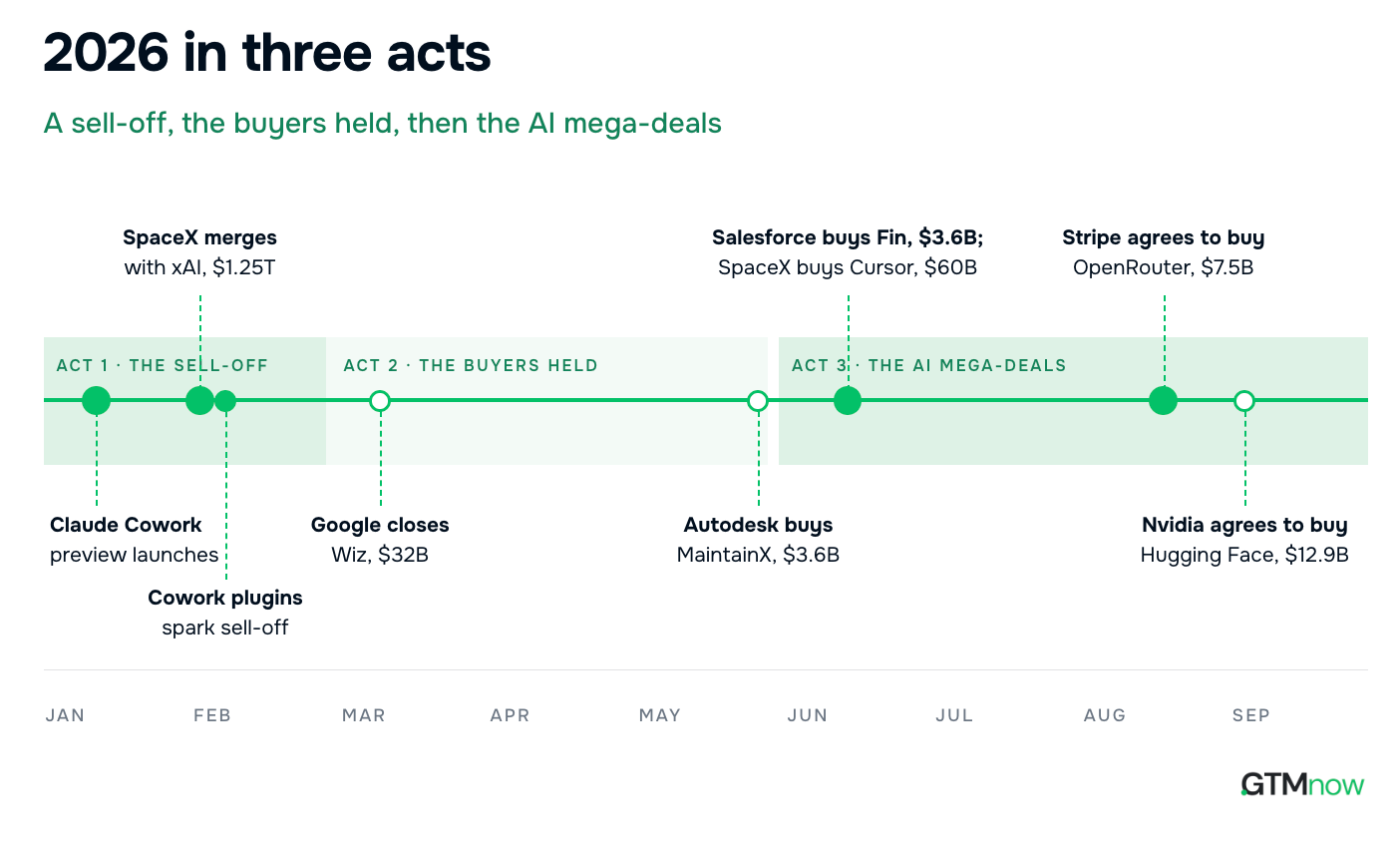
Act 1: The sell-off. When Anthropic added plugins for legal, finance, sales and other jobs in Q1, investors started asking which software an AI agent could replace. In the first week of February, software and related stocks lost close to $300 billion in value.
Act 2: The buyers held. The sell-off didn’t derail the big deals already on the table. Deals priced in 2025 closed without being renegotiated: Thoma Bravo closed its $12.3 billion Dayforce buyout, Palo Alto Networks closed CyberArk for about $25 billion, Google closed Wiz for $32 billion, IBM closed Confluent for $11 billion and ServiceNow closed Armis for $7.75 billion. Hg closed its $6.4 billion take-private of OneStream, agreed at a 31% premium just weeks before stocks fell.
Act 3: The AI mega-deals. By June, the sell-off had faded. Then the biggest acquisitions of the year arrived: SpaceX bought Cursor for $60 billion in stock, Nvidia agreed to buy Hugging Face for a reported $12.9 billion, AMD agreed in late September to buy World Labs for $8.2 billion and Stripe agreed to buy OpenRouter for a reported $7.5 billion. Salesforce bought Fin for $3.6 billion.
The playbook of the year: how SpaceX bought Cursor
The biggest acquisition of 2026 took SpaceX three steps.
Step 1: Create the currency. On February 2nd, SpaceX merged with xAI in an all-stock deal that valued the combined company at $1.25 trillion. A cash-hungry AI lab became part of a company headed for the public markets.
Step 2: Price it. On June 12nd, SpaceX began trading after the largest IPO in history, at a valuation of about $1.77 trillion.
Step 3: Spend it. Four days later, SpaceX exercised an option it had secured in April: buy Cursor for $60 billion, or pay $10 billion for the work the two companies had been doing together. It paid the full $60 billion in stock, about twice Cursor’s $29.3 billion valuation from November and roughly 23 times the $2.6 billion in annualized revenue from business customers that Reuters reported. The deal came with up to $10 billion in breakup protection for Cursor, and it closed on August 14th.
The biggest software deals of 2026, by the numbers
Here are the 60 software deals of $250 million or more announced or closed between January and September, with a US buyer or target. Leaving out the $250 billion SpaceX–xAI merger, the other 59 add up to about $260 billion. The five biggest account for more than half of it.
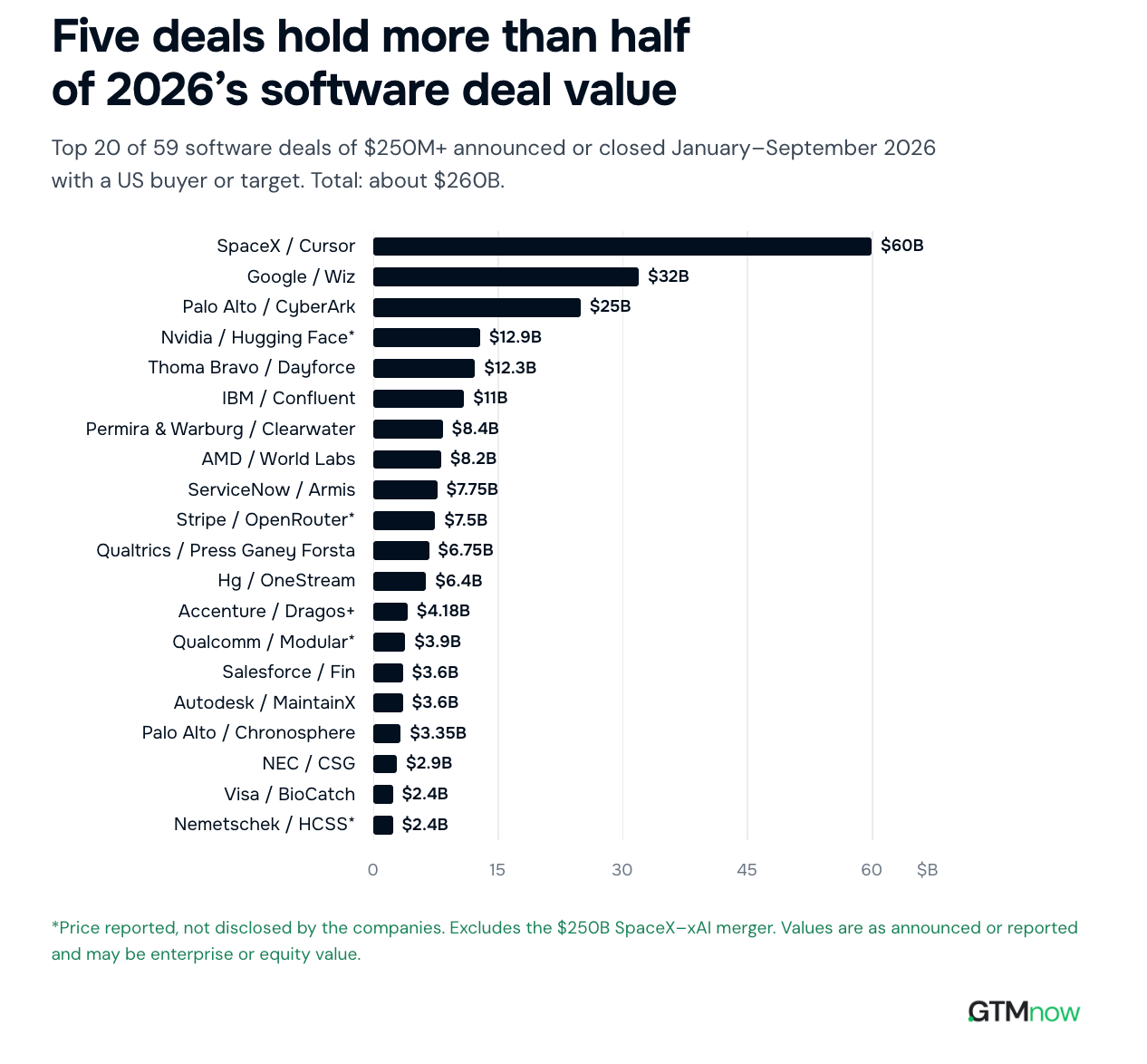
Three things stand out.
The top is very concentrated. Leaving out the $250 billion SpaceX–xAI merger, the other 59 deals add up to about $260 billion. The five biggest account for more than half of it.
AI and security set the prices. Cursor, Wiz, CyberArk, Hugging Face, Armis and OpenRouter alone make up more than half of the total. Buyers paid for developer distribution and for security, two things most AI rollouts need.
The GTM deals sit in the long tail. Fin, LiveRamp, Listen Labs, Semrush, Contentful, Metronome, ON24, Common Room and LivePerson together add up to about $13 billion. And one of the biggest GTM deals of the year never disclosed a price at all: Seismic’s merger with Highspot. Neither did Qualified, Momentum, m3ter, Warmly, Pocus or DoubleO.ai, so none of them appear in the chart or the list below.
The list
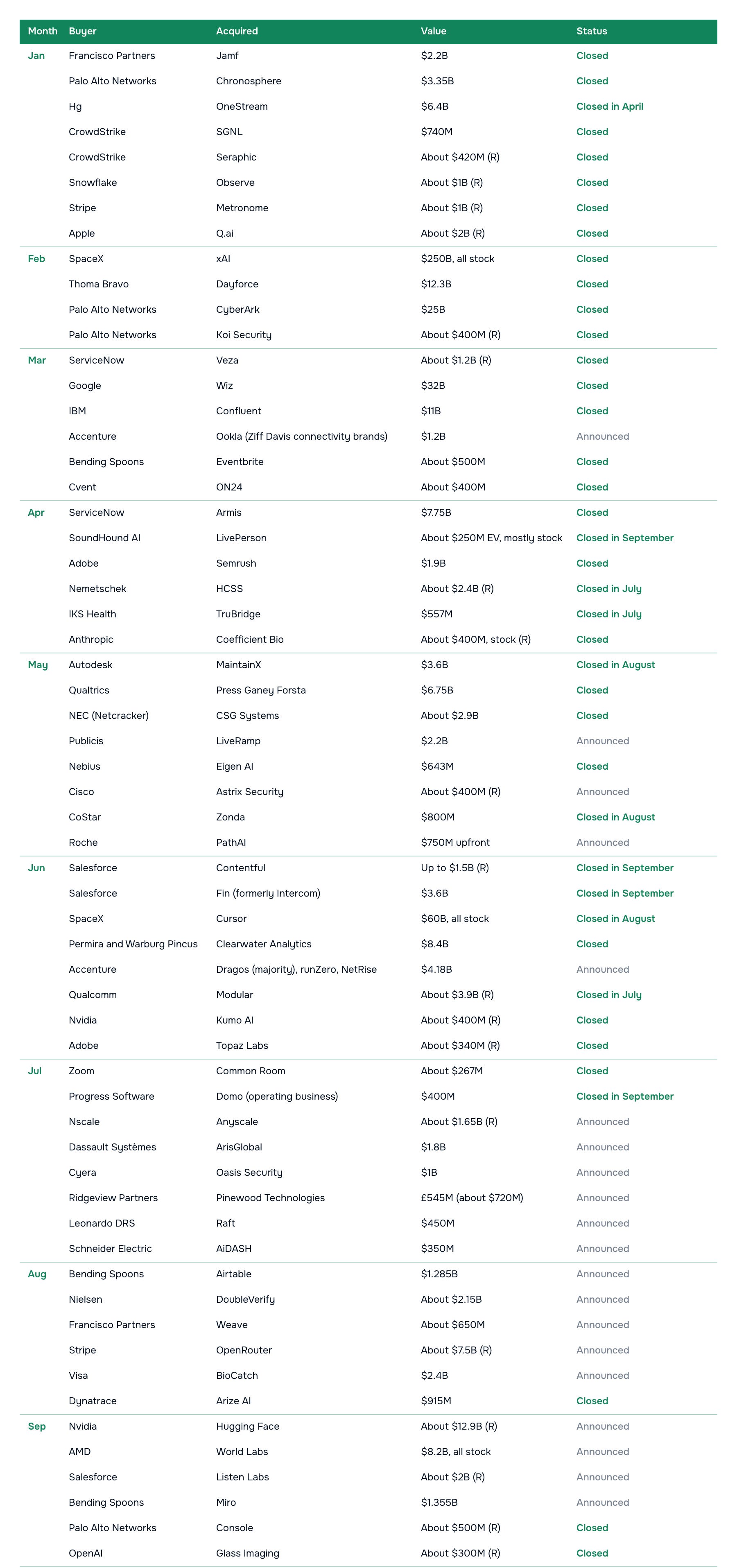
The list covers software deals valued at $250 million or more, announced or closed between January and September 2026, with a US buyer or target. Deals announced in 2026 are listed by the month they were announced. Deals announced in 2025 that closed this year are listed at their closing date. Values are as announced or reported and may be enterprise or equity value. (R) means the price was reported by the press rather than disclosed by the companies. We’ve aimed to be comprehensive, but some deals may be missing.
Two markets, running at once
The headline numbers say M&A is booming. The details say it depends who you are.
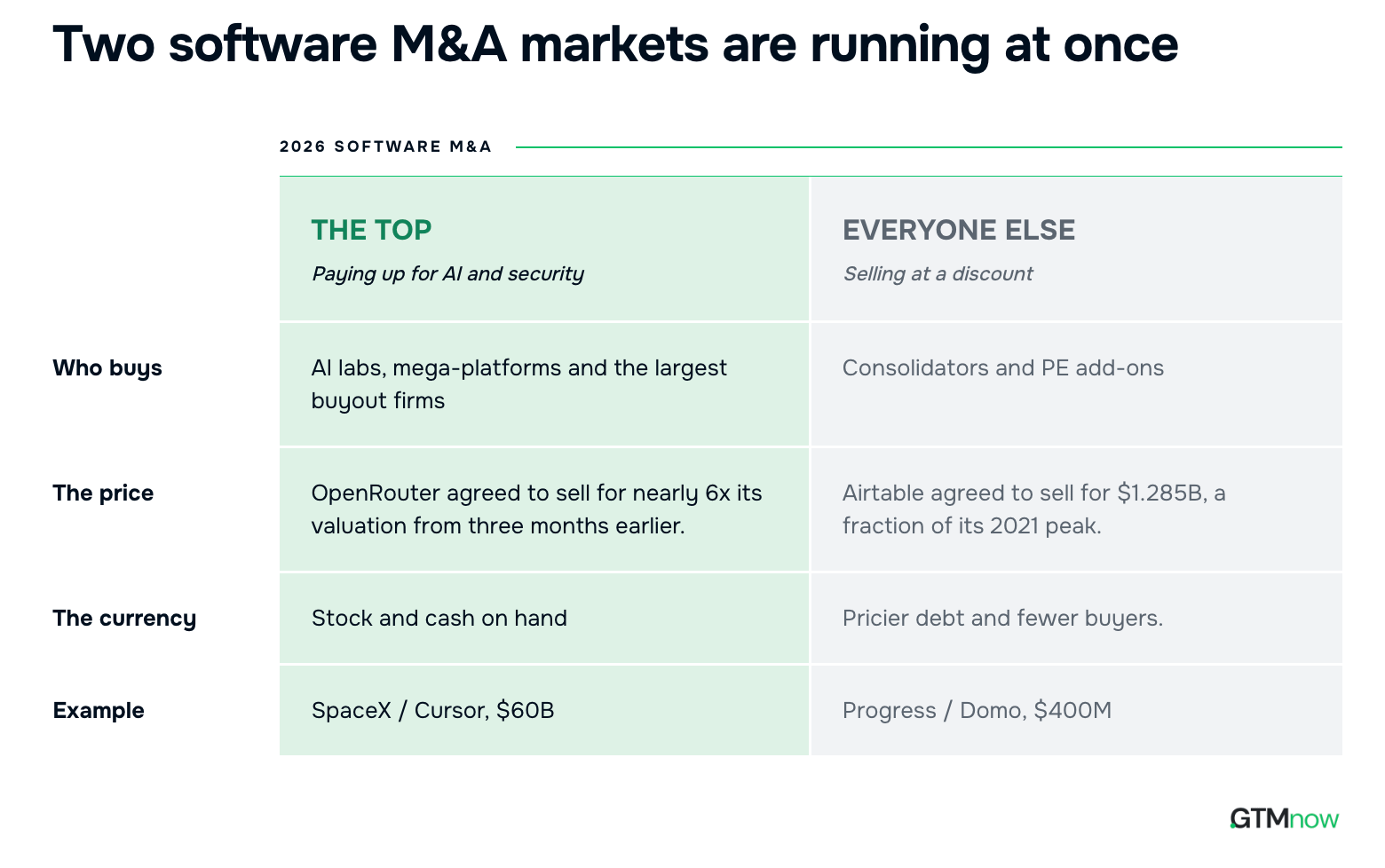
At the top, buyers are paying up. OpenRouter, a model-routing startup founded in 2023, raised money at a $1.3 billion valuation in May. In August, Stripe agreed to buy it for a reported $7.5 billion. SpaceX paid for Cursor entirely in stock, days after its own IPO. When the asset sits at the center of how AI gets built or secured, price is not the constraint.
Everywhere else, sellers are taking what the market offers. Airtable, once valued above $11 billion, agreed to sell to Bending Spoons at a $1.285 billion enterprise value. Domo sold its operating business to Progress for $400 million. LivePerson’s board contacted 66 potential buyers before agreeing to sell to SoundHound for about $250 million in enterprise value.
Private equity is buying selectively. By midyear, only seven software platform buyouts had topped $100 million, and platform deals’ share of private equity software deal value hit a 10-year low.
What this means for you
Venture returns come in short windows. US venture-backed companies exited for about $753 billion in 2021, according to PitchBook-NVCA. In 2022, that fell to about $71 billion. When the window is open, money floods in. Then it closes as fast as it opened.
The window is open now. SpaceX has already gone public, OpenAI and Anthropic have filed confidentially, and acquirers are paying record prices for the right assets.
Benchmark’s Chetan Puttagunta explained why that window matters on the GTMnow Podcast. In a typical year, only about 20% of customers in a category are in market to buy new software. A platform shift like AI pulls far more buyers in at once, the same way the move to cloud let Salesforce replace Siebel. The companies that grab share during that window tend to stay on top.
The bottom line
In January, the question was whether AI would make software worthless.
Nine months later, the answer from the people writing the checks is clear. Software with data, workflows and distribution still commands a premium. Software that is only code is worth what someone will pay for its customers. Companies never bought software just because they couldn’t build it. They bought it for trust, compliance and to avoid maintaining it themselves, and that hasn’t changed.
Tag @GTMnow so we can see your takeaways and help amplify them.

AI startups have bought 195 other AI companies so far in 2026, already 14% more than all of 2025. OpenAI leads with 10 deals, followed by Anthropic and Legora with five each and Harvey with four. Distinct buyers grew just 2%, so a few winners are doing most of the buying.
A 10-person startup called Bites lets diners order food through ChatGPT, and DoorDash is already feeling it. Restaurants pay a flat $1 fee instead of 15-30% commissions, and one owner has moved 65% of orders to Bites. When agents do the ordering, the platform loses the customer relationship and the ad revenue that comes with it.
Paul Graham’s new essay argues the best question to ask about a startup is how to make it more powerful, not how to add revenue. His playbook is to own the customer relationship, build network effects, go full stack and sell to early-stage companies that decide fast. Squeezing customers gets you 2x at most, he says, while creating new value for them gets you 10x or 100x.

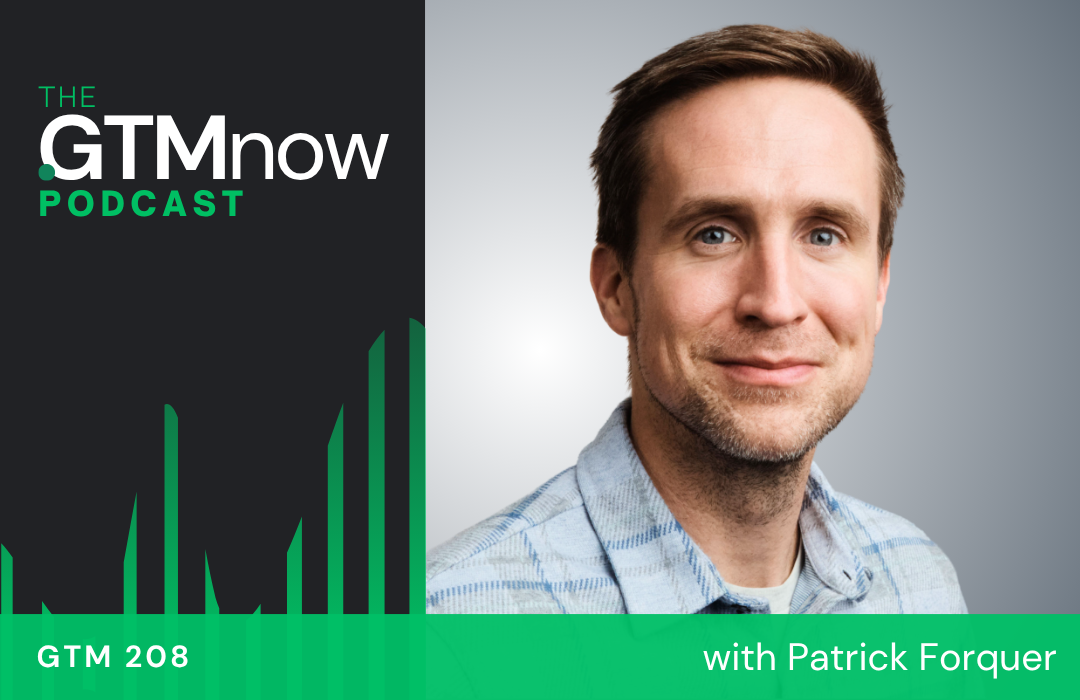
GTM: How Legora Went From $3.5M to $200M+ ARR in Just 2 Years | Patrick Forquer
Listen through the links in the page above or by searching wherever you get your podcasts “The GTMnow Podcast.”

Avarra (GTMfund company) – raised a $17M Series A, to upskill GTM teams with AI avatars rather than replace them. Customers like Elastic and Proofpoint have cut ramp time roughly in half, ARR is up 400%+ YoY, and reps run 10,000+ coaching sessions a week.
Arena – the AI leaderboard, raised a $200M Series B at a $3.1B valuation, nearly doubling in 10 months. Arena gives away its consumer rankings and sells evaluations to enterprises, which took annualized revenue from about $30M in January to $100M by June.

Sr. Brand Partnership Manager at Statusphere (Remote – Orlando, FL)
Revenue Enablement Manager, AE at Owner (Toronto, Canada)
Content Marketing Manager at Obvio (San Carlos, CA)
Product Marketing Lead at Writer (Hybrid – SF / NY)
Technical Product Manager, Founding team at Aviator (San Francisco, CA)
See more top GTM jobs on the GTMfund Job Board.

Upcoming events you won’t want to miss:
TechCrunch DISRUPT: October 13–15, 2026 (San Francisco, CA)
GTMfund AGM/Retreat: October 15-17, 2026 (San Francisco & Napa, CA)
Net 30 (AI x Finance Summit): October 21, 2026 (NYC, NY)

Some GTMnow Network love to close it out – we appreciate you.