

Your top 20% know how to win deals, while the other 80% are guessing.
Your strongest performers carry your KPIs by running the same playbook on every deal, while you’re spending years (and money) trying to clone them. Meanwhile, across the rest of the team, deals stall, single-threaded with thin business cases and mutual action plans that don’t get actioned.
Accord makes your top performers’ playbook the whole team’s standard. Shaped by your unique sales process and real-time buyer conversations, Accord Agents handle the work between calls to move deals forward, so reps can focus on their buyers, and the conversations that close deals.
Accord brings agentic execution and the buyer experience together in one platform, turning how your best reps sell into how your entire team executes. Accord customers see an average 40% increase in deal size and 20% faster sales cycles.
Ready to be next? Visit inaccord.com
Inside the GTM of 3 AI-Native Companies That Scaled Past $100M
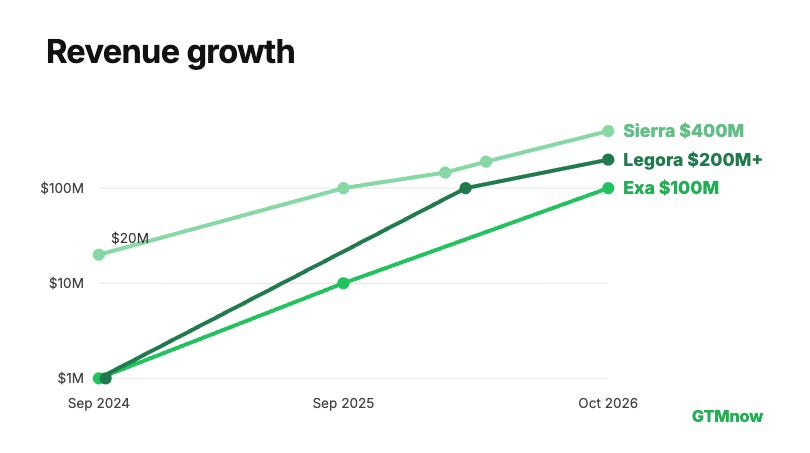
Sierra passed $400M in ARR about two and a half years after launch, and its last doubling took five months. Legora went from $1M to $100M in less than 18 months, then passed $200M. Exa crossed $100M in annualized revenue after growing almost exactly 10x a year for three years. Two years ago, Legora and Exa were each sitting at roughly $1M.

Over the past few weeks we sat down with the people running go-to-market at all three: Reggie Marable at Sierra, Patrick Forquer at Legora and Marcus Holm at Exa. They sell to completely different buyers, so you might expect three different stories.
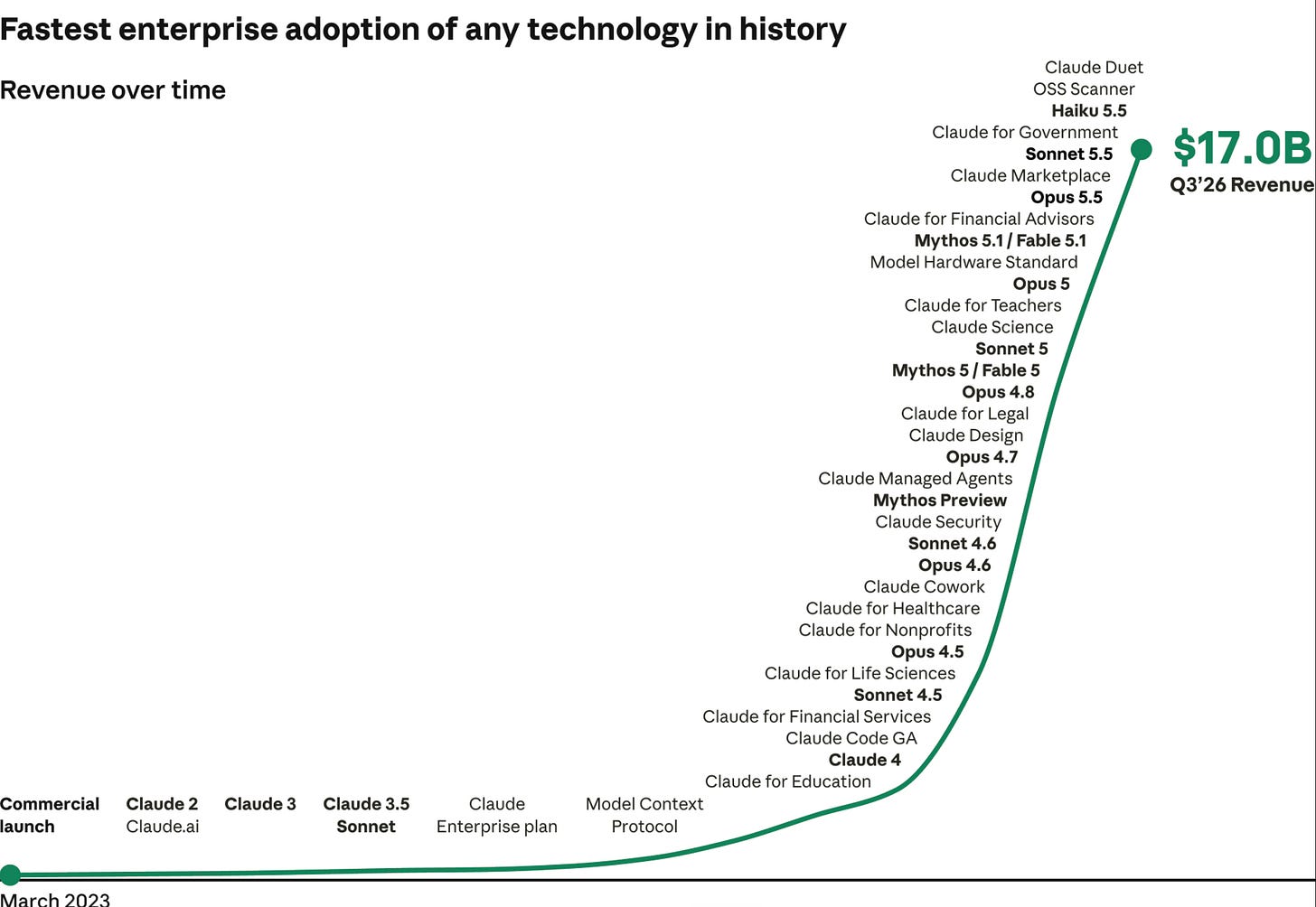
Instead, one idea kept coming up: the sale doesn’t end when the contract is signed. Anthropic’s S-1 showed the extreme version: customers from a year ago now pay about 9x as much in total.
To be fair, that isn’t new. Everyone in the go-to-market space has heard “retention matters” more times than they can count. What’s changed is when the money actually shows up. With perpetual licenses you got paid up front, and whether the customer used the product “was kind of inconsequential.” With subscriptions, you scrambled in the three months before renewal. In a usage or outcome model, you only get paid when the customer actually uses the product, so there’s no renewal to scramble for at all.
This edition breaks down how each of them lands customers, what they charge for, who owns the account after it closes and who they hire to do it.
How they land customers
Sierra starts with a demo built around the buyer’s own use cases, then asks for a paid proof of concept. A dedicated team builds an agent for three or four customer journeys, tests it against simulated traffic, then puts it live on about 5% of real traffic and ramps up as the agent gets better. That takes anywhere from a month to four months. Reggie Marable (Chief Customer Officer, Sierra) said those proofs of concept turn into long-term contracts at “an incredibly high conversion rate.”
Legora is usually the first product of its kind inside a law firm, so it’s teaching the buyer what good looks like while it sells. Most customers try before they buy, which also makes the pilot critical. Patrick Forquer (CRO, Legora) said converting pilots wasn’t the problem. Getting into them was. There were “too many deals where we just weren’t playing because people didn’t know who we are,” which is why Legora paid for a brand campaign with Jude Law (and, more recently, Aaron Judge and the Yankees).
Exa sells to developers, who’d rather not meet a salesperson at all. As Marcus put it, “there’s nothing I’d rather not do than go to dinner with a stranger who wants to sell me stuff.” So Exa lets the product do the selling: developers sign up on their own, start building, and see the value before anyone from sales gets involved. Sales shows up once they’re already using it.
What they charge for
This is where Sierra made its biggest bet. It has used outcome-based pricing since launch, which means it gets paid when its agent resolves an issue or closes a sale on its own, and not otherwise.
In other words, Sierra carries the risk if the agent doesn’t work. That was a bold call back in 2024, and a lot more companies are moving that way now.
Legora is making a similar shift. It started on per-seat licenses, which CEO Max Junestrand has said are “optimal for the buyer” but not for Legora. In June 2026 it moved its most autonomous agent, Agent Pro, to consumption pricing, so firms pay for the work the agent does instead of for logins. The CEO describes where it’s heading as “outcomes delivered,” similar to Sierra.
Exa charges on consumption too, which changes what the sales team is even there to do. As the CRO says, “you’re always on trial.” So the comp plan pays reps for landing a customer and for growing it, with different commission rates for pay-as-you-go and contractually committed revenue. He doesn’t want reps closing a deal, flipping it over the fence and moving on. He wants a plan “where it’s not a hit and run.”
Who owns the customer after the deal
This is a super interesting part. Legora hires 2 post-sale people for every 1 pre-sale hire. The biggest team in the sales org is legal engineering: attorneys who set Legora up around each firm’s documents, templates and drafting style.
The CRO of Legora believes that most companies pour money into sales and support and underinvest in the stretch between the two. “The speed and quality of the implementation is the number one leading indicator,” he says. The technology works, “but unless people are going to actually implement and use it in a meaningful way, then we’re all wasting our time.”
Sierra does something similar with engineers. The team that builds a customer’s agent during the proof of concept doesn’t hand it off once the contract is signed. They “stay on the engagement through the life of the customer relationship.”
At Exa, that job sits with the reps. The CRO describes the role as being “the jungle guide”: looking at how a customer actually uses the product and pointing them to the next use case, or to another team that could use it.
Who they hire
The bar is high at all three.
Reggie’s first eight sellers at Sierra, a group he calls the Elite Eight (he’s a big basketball fan), were all sales leaders willing to take a step back to join. And the founders never stopped selling. Even to this day, at their scale of $400 million ARR, “everyone is in sales.”
Patrick screens hard for AI fluency. Using AI to summarize your call notes doesn’t count; that’s entry level. He wants reps who’ve built automations that do real work, like a recorded meeting that updates the account plan, the Slack channel and the Salesforce opportunity on its own. You can hear more details on what he deems to be basic vs. more advanced here.
Marcus looks for humility, urgency and agency, and says you can usually tell within a new rep’s first week or two whether they’ll make it.
What they share, and where they differ
A few things show up at all three:
- The buyer sees it work first. A paid proof of concept, a pilot or self-serve usage, always before a big commitment.
- Usage is the goal, not the signature. Sierra and Exa built that into the price. Legora built it into the org chart.
- Post-sale gets real headcount. Forward-deployed engineers at Sierra, legal engineers at Legora, reps focused on expansion at Exa.

What tipped each one into faster growth was different, though. Sierra’s came from scale: more sellers and agent builders, expansion into 60 markets and launches like voice. Legora points to two decisions: a pilot it keeps improving and the 2:1 post-sale hiring. And Exa’s demand was already there, so it was really about layering sales on top of it.
Tag @GTMnow so we can see your takeaways and help amplify them.
More for your eyeballs
The Information released its 50 Most Promising Startups of 2026. It’s the 7th annual list, across seven categories, with security added this year. To qualify, a startup had to have raised no more than $100M at a valuation under $1B, or be under two years old and valued at no more than $1.5B. 24 of the 50 were founded in 2025 or 2026, and 23 have more than $10M in annualized revenue.
Jensen Huang resigned as NVIDIA’s CEO after 33 years. He also left the board, effective immediately. CFO Colette Kress is now interim CEO. No doubt there will be more updates on this soon.
Anthropic set its IPO price range at $70 to $78 a share, implying a valuation of about $1.4 trillion. The listing lands on the heels of an S-1 that read like an enterprise GTM masterclass: net revenue retention around 900% and more than 11,900 customers spending $100k or more.
OpenAI acquired Odessia, the AI travel agent startup founded by Sonder’s creator. Small in dollars, loud in signal: OpenAI is buying consumer-agent products outright instead of waiting on the ecosystem.
Nominal raised a $240M Series C at a $3B valuation, led by Lightspeed and co-led by Insight Partners, for its Hardware Intelligence Platform. More than 80 commercial and government organizations use it, including five of the seven largest defense contractors, and its first AI agent, Nominal Analyst, investigates engineering data with answers traceable to the underlying evidence.
More for your eardrums
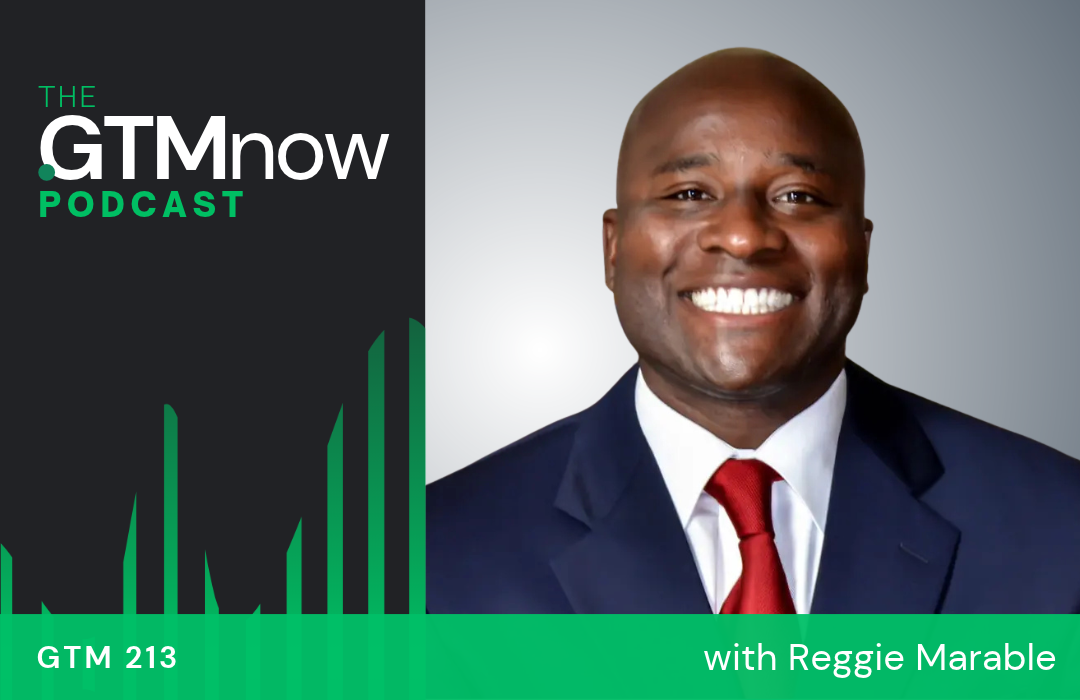
GTM 213: How Sierra Went From $0 to $400M ARR in 2.5 Years | Reggie Marable, Sierra
Listen through the links in the page above or by searching wherever you get your podcasts “The GTMnow Podcast.”
Startups to watch
Rox – raised a $100M Series B led by General Catalyst and March Capital, at a $1.3B valuation, for its AI-native CRM. Customers include Ramp, New Relic, MongoDB and Groq, and it plans to grow its U.S. commercial team 5x.
WhiteMatter – raised a $20M Series A led by Blumberg Capital to help enterprises govern their AI agents. It manages 2.25M agents for customers including Concentrix and Sentara Health, with 5x revenue growth in six months and about 200% net revenue retention.
Hatz AI – raised a $24M Series A led by Nadia Partners for a platform that lets managed service providers offer AI to small and mid-sized businesses. Its MSP partner count tripled, and headcount grew from 14 to about 60.
Hottest jobs of the week
- Enterprise Account Executive – NYC at Atlan (New York, NY)
- Solutions Engineer, Mid-Market at Vanta (Remote – US)
- Partner Success Manager – Solutions Architect at CaptivateIQ (Remote)
- Social Content Creator at Gorgias (New York, NY)
- Senior Manager, Content & Communications at Spekit (Remote – US)
See more top GTM jobs on the GTMfund Job Board.
GTM industry events
Upcoming events you won’t want to miss:
- GTMfund Toronto Dinner: November 16, 2026 (Toronto, Canada)
- GTMfund NYC GTM Leader Happy Hour: November 18, 2026 (NYC, NY)
- Crossbeam AI Summit 2026: December 9, 2026 (Virtual)
- Show & Tell: Selling with AI: December 9, 2026 (NYC, NY)
GTMnow community love
Some GTMnow Network love to close it out – we appreciate you.