
The GTM Podcast is available on any major directory, including:
AI isn’t just changing how we sell. It’s changing how buyers make decisions before they ever talk to you.
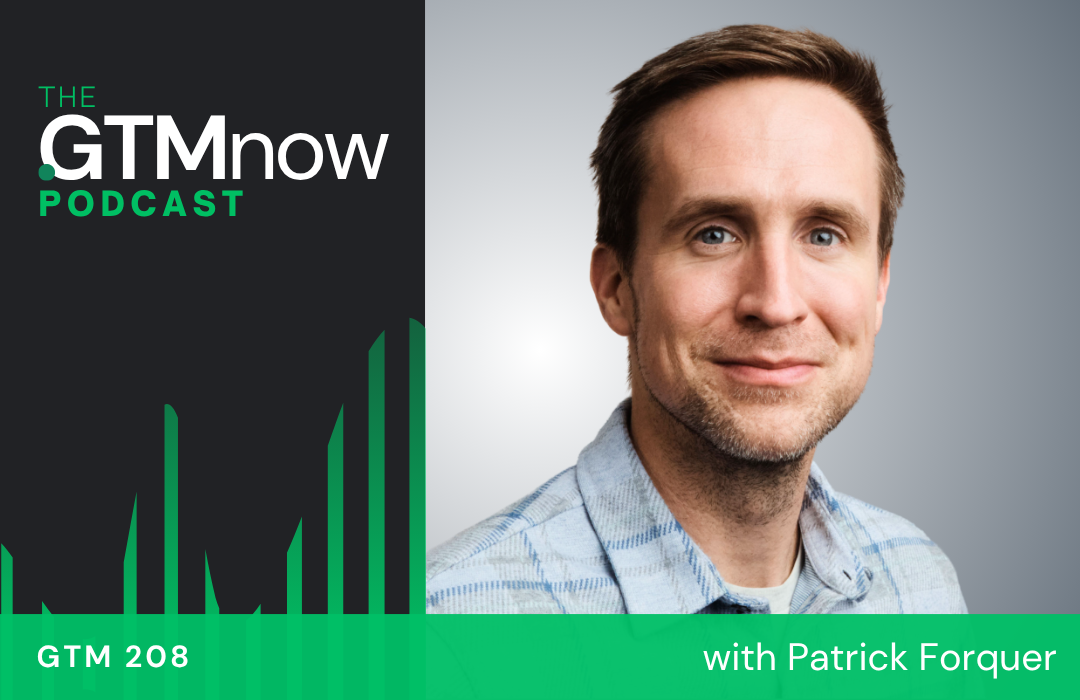
Sam Senior, Founder and CEO of TestBox, joins Sophie Buonassisi on The GTMnow Podcast to break down exactly what’s happening to the B2B software buying process right now, and what go-to-market leaders need to do about it immediately.
If you’re a founder, CRO, or AE wondering why your pipeline feels different, this conversation will give you a clear framework for what’s happening and what to do next.
Discussed in this episode
- Why 70-80% of purchase decisions are already made before the first call (and it’s accelerating)
- The shift from discovery calls to validation calls, and how to prepare
- CEO (AI-version of SEO): how LLMs are shaping what buyers believe about your product
- The “day one shortlist” shrinking from 3-4 vendors to 1-2 vendors
- Agent-to-agent procurement: Sam’s timeline for when AI agents fully take over buying
- Why the mid-funnel is actually getting longer, not shorter
- The “Fake Nothing, Prove Everything” campaign that went viral post-Series A
- How TestBox runs 15 AI experiments per week across the entire company
- Using Google Vertex video analysis to read prospect body language on sales calls
- How to build an AI-first culture without burning out your team
- Books: The 15 Commitments of Conscious Leadership, No Ego, Courageous Marketing, Good to Great
Episode highlights
0:00 – Cold open
1:09 – What Test Box does
2:43 – How buying has changed
5:48 – What founders/CROs should do now
7:05 – GEO: AI version of SEO
9:02 – Why mid-funnel is expanding
21:17 – Agent-to-agent procurement
26:02 – All procurement by agents in 3-5 years
29:09 – How vendors differentiate beyond product
33:30 – The croissant campaign breakdown
45:50 – 15 AI experiments per week
47:10 – Analyzing prospects via video AI
48:29 – Building AI culture in your team
52:39 – Book recommendations
Key takeaways
1. The first call is no longer a discovery call.
Buyers are doing so much research via LLMs before reaching out that by the time they talk to you, they’ve already made 70-80% of their decision. Your job on that first call is to validate (or correct) what they already believe, not discover their needs together.
2. If you’re not on the day one shortlist, you’ve already lost.
That shortlist has shrunk from 3-4 vendors to 1-2. The way to get on it is to audit what LLMs are saying about you right now. Ask Claude or ChatGPT what your buyers are researching and how your product shows up in those answers.
3. Agent-to-agent procurement is 3-5 years away, and the first steps are already happening.
Sam laid out a clear progression: LLM research today, AI-assisted trial evaluation in 12-18 months, agent-to-agent demos in 24-36 months, and full AI-led procurement including negotiation within 3-5 years. The companies building for this now will have a massive advantage.
4. The mid-funnel is getting longer, not shorter.
Buyers come in with high expectations because they’ve already TestBoxed your use case in ChatGPT or Claude and got 70-80% of the result in 30 seconds. Bridging that gap to 100% and proving your real value takes more time and trust-building than before.
5. AI adoption inside a company is a culture problem, not a tools problem.
Sam runs 15 AI experiments per week across the whole team, ties token usage to performance reviews, and runs a bi-weekly “Sneaks and Snacks” showcase. The shift only happened when he made it a company-wide operating model, not just an engineering initiative.
Thank you to our sponsors:
Reevo
Sales today still relies on manual work: stitching together “Frankenstacks” and toggling between a dozen tabs just to log a single call.
Reevo is breaking the mold. As a vertically integrated Revenue Operating System, Reevo replaces the fragmented maze with a single, AI-native workspace. It captures 100% of your first-party data, from emails to meeting recordings, to help reps find high-intent buyers, automate administrative “garbage,” and generate context-rich outreach that actually sounds human.
No more wasting time on data entry or disconnected tools. It’s one unified engine for the entire revenue cycle. Go Stackless. Learn more at reevo.ai.
Nooks
Outbound sales today is still built around manual work: writing emails, building lists, and managing sequences across disconnected tools.
Nooks is breaking the mold. With their new AI Sequencing product, Nooks is an agent workspace where AI works alongside reps, helping them understand accounts, prioritize the right prospects, and generate context-rich outreach based on actual first-party interactions.
No more wasting time in multiple tools – it’s one unified workspace for all your outbound channels. Arm your sales team with intelligent outbound. Learn more at https://www.nooks.ai/gtmfund
Follow Sam Senior
- Linkedin: https://www.linkedin.com/in/samuelsenior
- X (Twitter):
- TestBox:https://www.TestBox.com
Follow Sophie Buonassisi (Host)
- LinkedIn: https://www.linkedin.com/in/sophiebuonassisi
- X (Twitter): https://x.com/sophiebuona
- Newsletter: https://thegtmnewsletter.substack.com
Where to Find GTMnow
- Website: https://gtmnow.com
- LinkedIn: https://www.linkedin.com/company/gtmnow
- X (Twitter): https://x.com/GTMnow_
- YouTube: https://www.youtube.com/@GTM_now
- Podcast Directory: https://gtmnow.com/tag/podcast
The GTMnow Podcast shares how the best in tech build, scale and invest.
GTMnow is run by GTMfund, an early-stage venture firm made up of 350+ go-to-market executives from the fastest-growing companies.
Visit gtmnow.com for more episodes, The GTMnow Newsletter editions, and other content.
GTM 186 Episode Transcript
00:00 – 00:03
Sam: The way that people buy software has changed dramatically very quickly.
00:03 – 00:05
Sophie: Founder and CEO of Test Box.
00:05 – 00:11
Sam: Soul procurement will be done almost exclusively by agents, including in negotiation.
00:11 – 00:17
Sophie: But if you were a different founder, what are some of the kind of actions you would take to feel best prepared for right now?
00:17 – 00:32
Sam: I think first thing I would do is go to one of these agents, like call code or UPC or whatever you feel most comfortable with and ask it. What are my buyers researching at the moment? How am I turning off in those results? So the concept of a test box is these go to market infrastructure, where you can prove the real value of your product.
00:32 – 00:40
Sam: And so the concept was fake. Nothing prove everything. I don’t have an iPhone, which I get a lot of crap for.
00:40 – 00:44
Sophie: I don’t know how we made it here. This.
00:44 – 00:50
Sam: Is a test box. The expectation is that everyone is automating 10% of their job every month.
00:50 – 01:07
Sophie: How far off do you think we are to getting to that end stage?
01:07 – 01:09
Sophie: Sam, welcome to GTM now.
01:09 – 01:11
Sam: Thank you Sophie. Excited to be here.
01:11 – 01:31
Sophie: Super happy to have you here. Sam. And AI is changing so much about products fundamentally, but it’s also really changing how we buy and how we sell software products. And you’ve got such a unique vantage point as the founder and CEO of Test Box. So we’d love to start with that. And maybe just ground in what are you seeing in the space?
01:31 – 01:37
Sophie: And to give us a little bit of context about what you’re seeing a little bit more on what you’re building at Test Box and what you’re seeing?
01:37 – 02:02
Sam: Yeah, sure. So fundamentally, we think of ourselves as go to market infrastructure. So for all the sellers, Crowe’s out there essentially helping them with their mid funnel making as easy as possible for them to communicate the value of their product, build trust and confidence with their buyers, and then close them as quickly as they can without needing significant amounts of product, engineering or frankly, sales engineering support to be able to do that even on those lower, smaller deals.
02:02 – 02:23
Sam: And so what that means for us is I am talking to go to market leaders every single day about everything that’s changing. So whether that might be that outbound is completely dried up and they’re trying to figure out how to work with their inbound pipeline, how they move up to larger enterprise deals, potentially, how they’re thinking about their SKU coverage ratios, like all these different types of topics.
02:23 – 02:40
Sam: And fundamentally, one of the biggest issues that having at the moment is communicating the value of all these new AI solutions that they’re building in a way that actually builds trust and confidence. Because I think it’s very hard to get people not excited. That’s easy. But for them to believe that it’s going to work inside their business in a way that’s simple.
02:40 – 02:43
Sam: And so I’m spending all day, every day talking about that with people.
02:43 – 02:50
Sophie: And it has the conversation changed now? And evolved because you are selling to sellers, which is a really kind of fun phenomenon?
02:50 – 03:38
Sam: Yeah, I think about 12 months ago, everyone was very wary of what is going on, and they and they didn’t really know what to do. No one was really using cloud code. No one was experimenting with lovable and replit. They were only just starting to come out. And so it still really was the domain of engineers and now we’re talking to these software companies and they’re saying like, well, this part of our stack we’re building internally, we’re actually trying to reduce our tool stack in these ways. We’re trying to spend more time building these things ourselves. And we’re seeing that from our prospects too, as in they’re selling out to these companies and they’re saying, like, this part of my product is previously really valuable for them, is no longer is useful and relevant. And so they’re seeing that product needing to change really quickly. And also their entire sales methodology has to as well, because they need to be able to adapt on the fly to a build Best Buy conversation that didn’t exist previously for them.
03:38 – 03:58
Sam: And additionally, the looking at all across their channels of different ways to attract business email is really struggling at the moment. LinkedIn is becoming highly saturated. People are looking back at the phones again. They’re thinking about actually, is brand the thing that matters above all else. So we’re kind of going through this recycle of all the things that we’ve done for the past few years and realizing some of that just doesn’t work anymore.
03:58 – 04:00
Sam: And so there’s so much change happening right now.
04:00 – 04:13
Sophie: Tremendous, tremendous change. And so if you were a founder or CRO, you are a founder. But if you’re a different founder, what are some of the kind of actions you would take to feel best prepared for right now? Yeah, based on what you’re seeing.
04:13 – 04:31
Sam: I think fundamentally, the way that people buy software has changed dramatically very quickly. I think we all know the stats that people are spending. You know, 70 to 80% of their decision has already been made before they even speak to you. I think that’s ramping up even further. Where now they’re constantly talking to claw, trying to shortlist things.
04:31 – 04:50
Sam: And there was this data came out about 18 months, two years ago now that basically said that 90 plus percent of purchase decisions end up with the companies that were on your day one list. So day one list is basically and this actually was research done by my previous company, Bain. They basically came out and said, if you’re not on the day one list, it’s incredibly difficult for you to buy.
04:50 – 05:25
Sam: Typically that day one list is only 3 to 4 vendors. That has now started to shift. It’s now one two at most three vendors that you’re even having a conversation with now because rather than you trying to determine does this product work for me or not, is there value here? You’re actually moving from the question of does it work to validating it on that first call very quickly, because you’ve been under so much deep research previously, and so fundamentally, that first call has shifted from being a discovery call in many ways for both the customer and the seller to now really only being discovery for the seller, for the buyer.
05:25 – 06:07
Sam: It’s almost like a midway through the sales cycle conversation now, and we have to be able to match them with that energy. Otherwise they get frustrated and they get concerned and they feel like you’re not speaking that language. That needs to change quite quickly. So to answer your question, which was if I was zero or a founder doing this, I think first thing I would do is go to one of these agents, like call code or ChatGPT or whatever you feel most comfortable with and ask it, what are my buyers researching at the moment? How am I turning up in those results? And then reading it really carefully and saying, what are the things that I want to confirm a true about what they’re reading from these alums, and what do I want to dispel is actually incorrect? And how do I do that extremely early in the conversation with them? Because otherwise they’re going to continue believing what they heard and they saw from the LMS.
06:08 – 06:24
Sam: And so the first thing is go have that conversation and identify the gap between what people are seeing and what you are saying. Yeah. Secondly, then run the sales cycle yourself as if you’re essentially sacred shopping your account executives. Because if you’ve done all that research, you’re going to come in and you’re going to have a very different perspective.
06:24 – 06:44
Sam: How are they talking about the products? How are they talking about the rest of the sales cycle? I think, like you need to be in a place where you’re preempting the buyer’s questions more so than ever before, because you can we know what they’re asking these além. So we should be able to answer those questions before they even ask them to us in conversation.
06:44 – 06:52
Sam: So go validate that you’re buying process is actually the way you want it to be. And if it’s not, go make change really, really fast.
06:52 – 07:05
Sophie: Fantastic advice and probably the same thing goes for dispelling objections that people haven’t even raised. I can imagine coming from our lens too, because these preconceived notions people now have entering the process. Like you said, it’s just it’s further down the funnel now. Totally.
07:05 – 07:21
Sam: And people are thinking about this term CEO, which is basically the AI version of SEO, right? I can get an LLM to say almost anything that I want. If I run a good IEO program internally at test box currently, having been doing that in the sense of like creating rumors or about competitors or anything like that.
07:21 – 07:23
Sophie: So my next question, yeah, I guess I.
07:23 – 07:46
Sam: Think that’s a moral question that I’m not doing any of it, but yeah, absolutely can. So you could go and poison the data that the AI is using. And so your competitors might be saying something that’s misaligned with what you truly are and how you turn up. And the buyer might be seeing that and believing it. And so you really need to do diligence on what these lines are saying, because it’s very easy to get them to say anything you want to.
07:46 – 07:48
Sam: If you put enough content out into the world.
07:48 – 07:49
Sophie: Them.
07:49 – 07:51
Sam: It’s a little nefarious if you want it to be.
07:51 – 08:09
Sophie: Yeah, absolutely. Could be. And now there’s this middle layer in terms of people are just trusting lens as a middle layer versus going to the kind of end result for the intermediary, for communication. But it feels like the opposite is happening. People are more trusting even though there’s a layer versus beforehand. Are you finding that or are you seeing that?
08:09 – 08:18
Sam: I think that’s true, and I think that’s why the first conversation people are having is a validation conversation of what the LMS said, rather than a discovery conversation.
08:18 – 08:23
Sophie: So maybe that’s the progression or shift discovery to validation conversation as that first call.
08:23 – 08:27
Sam: You need to be prepared for that, because that’s the way your buyers are coming into the conversation.
08:27 – 08:42
Sophie: And are you seeing the buying cycle changing considerably other than it moving up? But like how many calls it’s taking, the actual sales cycle duration because people are doing so much research ahead of time, it’s almost like the sales cycle starts before people are even aware. So maybe for tracking purposes, we’re missing a little bit.
08:42 – 09:02
Sam: Yeah, I think it’s shortening up front, but it might actually be expanding in the middle. And why do I say that? Because it’s very easy to get your hands on a lot of these AI tools quite quickly and start working with them, but often for them, it takes maybe a month or two months of training and working with them to get them to output the results you actually want them to.
09:02 – 09:27
Sam: And so as a result of that, your buyers are expecting to be able to test these things earlier themselves too, so that they can build their own trust and confidence in it, particularly when they’re now using ChatGPT or anthropic or whatever. And they’re getting let’s say you’re an outbound tool. You’re right. Outbound email messaging, you can use those tools and get really good results, or you can use ChatGPT or anthropic and get something that’s probably 7,080% as good.
09:27 – 09:50
Sam: And as the buyer you think, oh, well, that was super easy. Like your thing must be exponentially better when actually the difficult part is going from 70 to 80%, getting all the way up to 100. Like that’s the value of the vendor doing it on top. But as the buyer, your expectations are so high. Coming straight into that conversation because you’ve had this experience by yourself that you thought was super fast and easy, that took you 30s.
09:50 – 10:10
Sam: Right. And so as a result of that, the trust and confidence gap that you are meaningfully more valuable than just what you can get out in LM is really high. You got to cross that bar somehow. And so I think that mid funnel is actually increasing because people need to prove out that it really bridges the gap of the 70% solution to a 100% solution.
10:10 – 10:37
Sophie: What’s been one adjustment that you’ve made to your sales process, given all these changes that has been super fruitful and helpful. A quick pause if you run go to market, you will recognize us all too well. Sales, relying on manual work, stitching together Frankenstein stacks, and jumping between a dozen tabs just to log a single call. But Revo is breaking that model to vertically integrated AI native revenue operating system that replaces the fragmented Mes into one workspace.
10:37 – 11:05
Sophie: It captures 100% of your first party data, from emails to meeting recordings to help reps find high content buyers and automate admin work and generate outreach that actually sounds human in this AI world. No more wasting time on data entry or disconnected tools, just one unified engine for the entire revenue cycle. So go stackers at revo dot I that’s rev okay. I will be in the show notes. Back to the episode. We if you want to disclose your I got it.
11:05 – 11:34
Sam: So a few changes we made. First thing was as much of our sales cycle that we talked about and showed, we decided, let’s try and get that in the customer’s hands and actually made some of our products. That was previously a sales led motion, now a product led motion that people could try out for themselves. We actually so a couple of weeks ago we launched this new product, our synthetic data generator basically helps build out these stories that speak specifically to your prospects for both your demos and other places within your business.
11:34 – 12:09
Sam: And we previously did that through our sales cycle for our customers to help them understand it, but it was still a bit too ambiguous and nebulous for them to really understand, like how they would use it day to day. So I thought, you know what, let’s go put this as a PG type experience. Initially my help with this as was, oh, we’re going to see a bunch of demand for this. We know this demand for this data generator. What ended up actually happening there was less demand for the PG experience, but there was way more demand for the sales led experience now, because people got a taste of it throughout PG model, like they’re not signing up for it and then using it extensively, the signing up for it, testing and going, oh, this is really good.
12:10 – 12:26
Sam: I now want to book a demo with you and talk about what the whole platform experience could be. And so the reason I bring that up is that’s been a big change for us. Something that I thought was actually going to drive a bunch of demand in a PG ongoing experience is actually ended up being essentially a lead magnet.
12:26 – 12:40
Sam: Yeah. And so I’m thinking about how else can I enable my product to be a lead magnet and an onramp into our platform. And so we have a couple of things that we’re going to be launching over the next couple of months as PG type experiences, because we know there will be an onramp into our platform.
12:40 – 12:49
Sophie: Super interesting. And I mean, one that you work extensively into, just around showing the product. Yeah. And being able to surface that kind of go to market infrastructure around products too.
12:49 – 13:09
Sam: I think what we’re going to see is there going to be a lot of unbundling of these platforms and those really critical features and capabilities that people love. If you can get them in the customer’s hands early, that will lead to more pipeline for you. That’ll turn into much bigger enterprise deals or whatever later on. So you just need to give them that value as quickly as you can before they even talk to you.
13:09 – 13:20
Sam: As we said that 80% of the research is done before they even speak to you, and then the LMS are now going to know that you have this PG type experience. And they could be like, oh, I recommend that you try this out. So it’s another way for you to get on the day one list.
13:20 – 13:33
Sophie: Yeah. Brilliant, brilliant. And I mean you work across so many different companies and customers to a test box. Are there any kind of macro shifts that you’re seeing across that are different than the ones you’ve rolled out?
13:33 – 13:47
Sam: One thing that we’re hearing, we haven’t seen a lot of people do it yet, but we’re hearing interest is how do we have AI enabled solutions engineers or account executives? They’re essentially available 24 seven. So I.
13:47 – 13:48
Sophie: Or a genetic.
13:48 – 14:41
Sam: Agent tech okay. So I want to buy XP software. Maybe it’s HubSpot, maybe it’s Gong Salesforce, whatever it is. And it’s, you know, 3 a.m. on the East Coast where I am in the world, it’s just not an hour when I can talk to anyone easily. And today you might be lucky if you get a video. You might be lucky if you get like an interactive product tour that you can kind of click through. That’s not the same as being out. Have a conversation with someone and one where you can dive really quite deeply into it, both at a sales rep level, but then also at a technical solutions engineer type level. And a few of our customers are talking about how do we just scale our teams for those times where either it’s an SMB type offering and the volume and the velocity of that doesn’t match our account reps quota and things like that, or where you are just trying to scale so massively and you’re not trying to add headcount to the team that people are looking at those AI enabled product experiences much earlier in this cycle.
14:41 – 15:05
Sam: Part of the reason why is I know I’m just keep throwing all these data points at you. No great. But about and again I’m going to lean on my previous employer, Bain. About 3 or 4 months ago, they released a piece of research showing that for the first time pretty much ever, there’s been a slowdown in account, executive hiring, significant slowdown where it actually has gone negative for some segments.
15:05 – 15:06
Sophie: That’s so interesting.
15:07 – 15:23
Sam: So people are actually saying we need to grow faster than ever. And the expectations are to grow faster than ever. You know, we have these companies going to 100 million or are in two years, right. Sierra’s done that recently. Yeah. And so they’re obviously scanning their account executive team. But I bet if you went to them and asked them what their quotas are, it’s substantially higher than anywhere else.
15:23 – 15:41
Sam: And so across pretty much all of enterprise software. And Bain did this work. They found that already in the last 12, 24 months or so, quotas are up 1.2 to 1.7 of what they were. And so you’re expecting all of this fast revenue growth and all of these major outcomes, but with far fewer people doing it. And so I think that’s a major change that we’re seeing.
15:41 – 15:46
Sam: Hence why people are talking about these 24 seven on capabilities.
15:46 – 16:04
Sophie: So interesting because I feel like there’s still eight roles that I’m seeing a ton of hiring around. But it’s such a small percentage compared to what it used to be like. It’s just more in comparison to others. I’m seeing big slowdown across marketing, customer success, a big kind of push around solutions, engineering, other kind of areas.
16:04 – 16:37
Sam: But I think that a role is fundamentally really different in the last six months than it was 12 months ago. Any idea that I am hiring, I now expect them to be avid users of cloud code. I expect them to be using cursor. I expect them to be building all of the prep materials for any conversation that they have. Automatically using these tools. I expect them to have a bunch of the SE toolkit now in this as well, because, you know, they no longer need to struggle to build this POC that they’re sharing with someone they can now, either they’re working with us as a customer or they’re like working with their own product directly with some of these tools.
16:37 – 16:50
Sam: And so what we’re seeing is the role is expanding into other functions. And they’re expected to be like go to market engineers now. And that’s I think the go to market engineer role is going to go away, which is maybe a hot take.
16:50 – 16:51
Sophie: It’s like pretty hot. Yes.
16:51 – 17:31
Sam: So it’s like it’s on the rise massively right now. And I think it’s still going to rise really hot for 12 maybe 24 months. And I think we’re going to see an extremely fast fall off on the other side, because the reason we created this go to market engineer role was because the people in Rev Ops weren’t able to do it, and the people as an account executive or ESA weren’t able to do it. But the tool kit for either of those functions is being brought to them extremely fast. And I think they’re just going to converge again. And all the people who, go to market engineers right now going to have to evolve again into probably being sellers, but they’re going to have the AI toolkit behind them. The go to market engineer, fundamentally, is the group of people who have taken on board all these AI genetic workflows faster than anyone else.
17:31 – 17:34
Sam: In a sales revenue perspective.
17:34 – 17:49
Sophie: Do you think, though, that just with the speed at which we’re moving with AI, there will be continuous progressions that are impossible for a year to still keep up with and thus far, and therefore we’ll have this rule that’s just designed to to continuously push kind of the boundaries.
17:49 – 18:25
Sam: I don’t think it’s a boundary on your skill set soon in terms of like a technical skill set, it really is a boundary on your own personal creativity and your ability to problem solve. Everyone can have open claw, and it can do almost all the things that you go to market engineers going to be doing today. If you know how to talk to it, you know how to ask questions. You know how to push it. That is the fundamental skill that every single person should be investing in, bar none. If I am, you know, sometimes people’s parents will ask me, oh, I have, you know, a 17 year old, that I’m thinking about college, works for HP, studying, etc., etc. and fundamentally, I’m typically telling them get some exposure to these things.
18:25 – 18:37
Sam: But ultimately the thing you’re trying to learn is how to push your thinking, how to be resilient, how to be creative in the way you solve a problem, and bring all of that into all your interactions with AI.
18:37 – 18:59
Sophie: And that brings me to a really important part. That is something that a lot of operators are really interested in, but also struggling with. Same as founders, and that’s hiring. So you mentioned you now look for ease and presumably other functions that are just are able to understand and grasp AI and move quickly and evolve quickly. How are you gauging those skill sets as you’re hiring?
18:59 – 19:18
Sam: We have to give them a project, and we have to tell them you can use as much AI as you need to. Here’s token usage, etc. ensure that their access to tooling isn’t limiting. Factor in their ability to showcase things to you. So that is absolutely critical. I can’t have people just say they’re working with Claude or they’re working with ChatGPT.
19:18 – 19:34
Sam: Like just being someone who’s chatting with those systems means that you’re already way behind, which to a lot of people is like, oh, I’m not even doing that today. You need to be building identity experiences yourself directly. I want to be able to ask you, what have you automated in your job in the last month? What about in the last six months, a test box?
19:34 – 19:48
Sam: The expectation is that everyone is automating 10% of the job every month, if not more so that in about ten months, less than 12 months, your entire job is fundamentally different and not doing the things you were doing before, unless they’re explicitly core to the role.
19:48 – 19:55
Sophie: Has it been challenging from a management perspective because people are evolving and adapting their usage of AI at different pieces?
19:55 – 20:12
Sam: I think about 60 to 70% of my org is in that model at the moment, and other people are still catching up. And so that’s a conversation. We’re just going through our performance reviews at the moment. And that is part of the rubric is what’s your use of these agent tools? Let’s talk about some examples of that.
20:12 – 20:31
Sam: What does your inference usage look like? What are the things that you’re doing that we perceive as manual that could be done in a more automated fashion. Like that is a core part of any performance rubric. And yeah, people getting feedback on here’s how we need to evolve. Otherwise, not just a test box isn’t about working at test boxes, about having a career over the next ten, 20 years.
20:31 – 20:45
Sam: It’s. And I’ve been talking about this message for probably about six months now with my team of this is your career nothing to do with me, nothing to do with this business. It’s agnostic of all of that. You need to do these things for your lifetime.
20:45 – 21:01
Sophie: Yeah, yeah, I know that. I always feel that way whenever people are like, oh, when do I carve it out in my day? Or you don’t? You do it on your weekend. You do it in your spare time because like, it is your career. It’s not your job, it’s your career. Yeah, but so now we’re talking about a lot of eejit use cases.
21:01 – 21:17
Sophie: Yeah. A big one that people talk about is the buying experience. Yeah. Right now we still have oftentimes not always humans actually going through the demo process. Yeah. What is that look like if it evolves when agents are actually taking demos for.
21:17 – 21:39
Sam: Humans, it’s 100% going to happen. And it is a conversation we’re having in our board meetings quite regularly. As a board, the world is very clearly going towards more agent to agent interaction. There are moments of it currently, but it will happen and software is a fantastic place to deploy an agent. Again, if you’re trying to evaluate something today, a buying experience is very human.
21:39 – 21:59
Sam: It’s very visual. There’s a lot of relationship based components to it. It’s highly emotional, right, because you’re thinking about keeping your job if you buy the wrong software or like the opportunity to be promoted, whatever it is, right. It’s highly emotional. And so today everything is about trust and confidence, both on the product. But also, are you going to support us successfully?
21:59 – 22:18
Sam: Are you not going to have security issues like it’s all these other things? Right. All of that second bracket is going to be really important in the future, but the first piece of the relationship is going to be important, but is going to slowly subside, where agents will be able to evaluate things in a very cold hearted, rubric style way in the future.
22:18 – 22:38
Sam: Let’s set up an example. Today I’m a VP of sales. I’ve got 50 account executives. I am moving up to a new CRM, maybe new outbound platform. I talk to 5 or 6 vendors. I do 5 or 6 sets of first sales calls. I ask them to fill out some RFP. I some of them take me out for dinner, others send me a gift.
22:38 – 22:59
Sam: Like all of these sorts of things are happening. It’s all very human to human. The first step that’s going to happen, we’re on level one of this process already, which is we reach out to ChatGPT and call and say like it’s it’s actually a good system for me. The second thing is I’m going to open up a trial environment, potentially, of that product and say, hey, Claude, go read all of the API documents associated with this.
22:59 – 23:19
Sam: Here are some screenshots of the product, maybe using code Co-work tell me if it’s going to meet this rubric that we have internally. That’s going to be the second step. The third step is going to be when these products start to expose themselves more in an agent type fashion, which is to say, I can now give my procurement agent because there is going to be a procurement agent, a link to your software agent.
23:19 – 23:34
Sam: So let’s say it’s HubSpot or outreach or whatever it is, and they are going to go talk to each other. And that procurement agent is going to ask, don’t just tell me about all the APIs that you have publicly available, but tell me about all the workflows there in the product. Tell me about how this thing works. I’m going to test out the reliability on this.
23:34 – 23:55
Sam: I want to see if I can do it, what the load testing is like. It’s going to go barebones like an engineer would when they’re evaluating something, and it’s going to automate all of that. And so that’s going to respond back with okay against that rubric. It’s got an A-plus here. Got an F grade here. And you’re actually going to get this very black or white answer to a lot of things quite quickly.
23:55 – 24:12
Sam: Then you as the human in this version are going to discern, well, am I okay with those trade offs? I’m in it or not okay with those trade offs. The next level is going to be all of those things, plus the ability to look at the rest of my software stack as it exists today. And can that new thing talk to everything in the way that I want it to?
24:12 – 24:29
Sam: What if I’m transferring data from this CRM to this other platform, and are they all going to be able to talk to each other effectively or not? And so you can just say, and I can keep going. Like you just see how this continues to level up where it’s no longer about how we are interacting with it, it’s more about how the agents will be able to interact with it.
24:29 – 24:35
Sam: It’s more about the actual true capabilities and less about do I feel great when I’m talking to these people during this whole cycle?
24:35 – 25:03
Sophie: Interesting, interesting. How far off do you think we are to getting to that end state? A quick pause if you run outbound sales, this is big news. Most reps are bouncing between five different tools just to send one email. But there’s a better way now. Is the AI agent workspace built for intelligent outbound, where AI agents and your reps work together in one place, looks as eye sequencing handles the busy work, finding prospects, writing outreach, knowing who to contact, and when.
25:03 – 25:20
Sophie: So your team can focus on actual conversations. If you’re evaluating your outbound stack or renewing legacy tools, check out Nooksack AI forward slash GTM fund. That’s not CSS. I forgot GTM fund.com.
25:20 – 25:36
Sam: Level one we’re already at today. Level two, I think, which is the ability to take some screenshots, maybe point out the API docs or whatever I’m doing that today. So I suspect you know where 12, 18 months out from that being a common thing that people are doing.
25:36 – 25:38
Sophie: You’re doing that when you’re evaluating.
25:38 – 26:02
Sam: Yeah. If I’m evaluating anything today, I will plug in Claude Co, called, you know, our intern. This is a very test box specific thing called our product graph. I’ll tell a product graph to go talk to this product and tell me about it. So we’re going to eventually turn this into a solution. But so that’s like 12 to 18 months away I think until people are regularly doing this, the agent to agents all talking to each other, I think where could be only 24 months from now could be 36 somewhere in that period.
26:02 – 26:10
Sam: And then within the next 3 to 5 years, all procurement will be done almost exclusively by agents, including in negotiation.
26:10 – 26:15
Sophie: Do you think when you say including the negotiation, there will still be an edge to a human to human negotiation?
26:15 – 26:43
Sam: Look, there’s always going to be human here because I need to trust you regardless. Even if my agent says that you’re great like Teju Cole, and I can get them to say what I want to say, right? That’s probably going to continue for some time here. But I need to trust you that when something breaks at 3 a.m. in the morning, I’m going to have someone I can call that can go get that result for me immediately that like, you know, that’s a really important thing that I look across all of the security things and I feel confident about them in the team and the way that they’re building.
26:43 – 27:02
Sam: Like, I want to believe that I’m buying a product that’s going to continue to evolve really fast for a long time. And so there’s these other softer factors that are still going to be really important, but I think the percentage is going to dramatically reduce over time that the human is doing. It sounds very like oh my gosh the whole wall is going to collapse.
27:02 – 27:21
Sam: All these roles are disappearing and I don’t think that’s the case. I think they’re just going to evolve dramatically. This why I’m saying I think the go to market engineer stuff is going to be reabsorbed back into account. Executives. And maybe some of the rev ops team think they account executive in the SE role is going to merge, and we’ll have more technical people like all these things will still be relevant.
27:21 – 27:37
Sam: And you’ll see some of the stuff I was talking about before. Very common in SMB, less common enterprise for a while. So there’s a lot to be figured out here. It’s all really murky. I can’t tell the future. I’m kind of guessing roughly the vector that it’s going in. There’s still going to be a lot of I need to trust you as a person behind it all.
27:37 – 27:45
Sophie: Still, what does that E role look like then? Say procurements predominantly handled by agents. Yeah. Where does the E come into play?
27:45 – 28:06
Sam: I think they will to some degree. I don’t know for sure here. So let me let me take a guess. I want to know that the company I am speaking to is reputable. As a human race, we tend to find ourselves quite nationalistic. So I notice I get a different reaction to someone when they based in the US, and then if they’re based somewhere else in the world and I feel the same.
28:06 – 28:29
Sam: And I know that might sound very odd, and maybe there’s like some racism, xenophobia and all of that. It is just part of being human. You think like people who look, sound like me, are close to me, physically, have similar moral beliefs or whatever, I’m going to just trust them much faster. And so I think there’s going to be a component of that humanness to it all, regardless of what happens from an agent perspective.
28:29 – 28:50
Sam: I don’t know if that feels a bit either, kind of crazy or woowoo of me, but I just think that, like, as humans, we still crave that connection. And behind that connection is a desire to to trust the other person. And if you can do that, I think that’s going to continue to improve. It’ll be the critical layer combined with any of these identity buying experiences.
28:51 – 29:09
Sophie: A super interesting you know, one thing I’ve been thinking about a lot lately is from the investor perspective, it’s always value at capital is commoditized for the best founders. So what is the value add that you create? And I see that mirroring back in the buying experience I don’t know if you see this similarly. But now what can vendors provide.
29:09 – 29:33
Sophie: Because as customer success increases, as all of you know, the capabilities are kind of getting that check. Mark. What is the differentiator for a vendor? A lot of the time it’s a value add that they can add to a network driven approach for their growth, distribution, other areas. And so I’m kind of seeing that taken from the investor lens that we see and now extrapolated again, SaaS companies, I don’t know if you’ve seen something similar or different.
29:33 – 30:37
Sam: Yeah. Two thoughts. One is a hit in the investor lens. One of the things I always hear from VCs is we want to make sure that, you know, we really want to work with you. Yeah, right. I think that still matters in the buying software process as well. I remember, 12, 18 months ago, there was a there’s a customer that we’ve now have for multiple years, multiple expansions, who told us one of the core reasons they worked with us is we were just clearly hungrier to work with them, had more of a desire, were willing to put in that extra effort which went from, you know, me getting up at 2 a.m. in the morning because I was in a different part of the world on on like a semi vacation. To be able to talk to them clearly showed we were hungry. Second was like I build all the decks for them internally for their executive selling and made sure it was crafted to their branding and like all these sorts of things. So you need to continue showing that you really want to work with these people. I think that’s part one. Second part is there are, as you’re saying, all these other value add ways to support people. So we recently went with a new software. And as we announced our most recent fundraise and some new product launches, I actually reached out to some of our vendors and said, like, hey, we did this. Any support would be appreciated.
30:37 – 31:07
Sam: And couple of them actively went out of their way. They posted about not just a like on my thing, not just a comment, a repost, and shared it with their organization. And it wasn’t just the founder, but it was multiple people on that team. And so immediately, regardless of my software experience with them over the next 12 months, I immediately have some more trust in them and more desire to work with them because they’re thinking not just about me as a customer of their product, but me as a customer aware and relationship creator between the two of us or us, our organization and their organization.
31:07 – 31:18
Sam: So if there’s any way you can, as a software provider, be able to provide value that is outside of your software, you will build immense amounts of trust and confidence.
31:18 – 31:39
Sophie: 100%. And that’s where I always think it’s not about providing the best product. It’s about making somebody successful in their career, not even their job, their career. And it all comes down and boils down to trust, like you said. And that’s why I think there’s still going to be a fundamental human aspect in some regard, because I will somebody know that Sam is going to wake up at 2 a.m. if there isn’t.
31:39 – 31:41
Sophie: Yeah. And if they’re relying on a rubric, I.
31:41 – 32:00
Sam: Think agents are going to be acting almost like as a fact sheet. So I have a rubric and it’s, you know, yes or no, very binary or it’s going to be it can do it 50% of the time, 80% of the time. Some score out of ten, right? Yeah. That is going to absolutely be true. But if you almost look at a people are talking about how taste is going to be one of the most important things in the future.
32:00 – 32:17
Sam: And you think of like function over form, which is a design systems. Or if you’re a creative person, that’s a common concept, right. And I think the agent is going to look at things, at the functionality of it all, and the human will still have the form or the taste aspect to it, which will be how do I feel when I use this?
32:17 – 32:26
Sam: Is this providing value in the way that I want it to, and all of the other bits of like, hey, is there someone I can pick up the phone with at 2 a.m. in the morning or like whatever it is as well?
32:26 – 32:29
Sophie: Yeah, a very layered process. They’re taking care of the fact.
32:29 – 32:38
Sam: That there’s going to be there’s an emotional part to all of this. As much as we all would love this not to be emotional, it’s unbelievably emotional to make a software purchase.
32:38 – 32:46
Sophie: Yeah. We can’t get away from it as humans. Yeah. And you recently announced your series eight. Yes. Congratulations. Along with three product launches.
32:46 – 32:48
Sam: Yeah, we’ve been extremely busy.
32:48 – 33:11
Sophie: Yeah, yeah, you can say that again. Yeah. Just pushing out a ton of incredible product launches. And then alongside this announcement, one of the pieces of content you actually pushed out was super creative. And it was this campaign around showing that go to market leaders don’t want fake aspects of things. So sending for example for croissant to a CRO and then him opening it and seeing his reaction.
33:11 – 33:28
Sophie: And then they would call and you would actually show up with real croissants. But I want to dive into the Sam because I heard about this campaign a couple days before it went live. Before you started it. Yeah. And so really you created and ran this entire campaign. Within a few days you jumped on a plane, you hand delivered Christians and other items to people.
33:28 – 33:30
Sophie: How did you pull off this campaign?
33:30 – 33:52
Sam: I absolutely should not take credit for this. I, I think I am the person who was in front of the camera, but I had two people who did a ton of work behind the scenes. So one of them, our head of customer Kat, she has been a fantastic addition to our team. And then the second person is actually my wife, Amy, has helped massively, not just on this, but on so many things.
33:52 – 34:12
Sam: So a recap of the campaign, it was really quickly and then explain how we got that. So the concept of test box is this go to market infrastructure where you can prove the real value of your product. And so the concept was fake. Nothing prove everything. And so we’re trying to play on this idea of how maybe when you’re buying a piece of software, you feel like you get a lot of smoke and mirrors, and it’s not exactly the way you expect it to be.
34:12 – 34:31
Sam: And Test Box can solve that problem. It’s the real thing. You’re going to build trust and confidence with your buyer, right? That’s what we’re we were trying to aim at it was hilariously ten days before we were, going live with our launch, and it was 7 p.m. on a Friday night in the office. My wife would come in to pick me up to do something.
34:31 – 34:48
Sam: Kat was still in the office. I went and sat down on the couch, and I basically was like, I feel like the video is helpful. It’s great. It’s going to get attention. But how do we capture interest in a different way that will break through the noise? Because all the marketing tactics stay very similar. They’re not breaking through in a way that people go, oh, I remember that.
34:48 – 35:00
Sam: And so we play with these ideas and we thought about, oh, you can sleep easy when you use Test Box. My favorite gifts ever that I got off of after a podcast was like this nod pod. It was amazing. I sleep really well with it, like this eye mask thing. It’s fantastic giving.
35:00 – 35:01
Sophie: Us ideas here. It’s really good.
35:01 – 35:17
Sam: You should totally get it. We thought of that, we thought of a whole bunch of things that we played with the idea of. Well, if our campaign’s around fake. So what are fake things like fake Rolexes? Turns out fake Rolexes are extremely expensive. Yeah, yeah. You can’t get a particularly when you’re trying to do anything at scale.
35:17 – 35:36
Sam: When I say extremely like a fake Rolex is going for, like 300 bucks still, right. And we’re not going to buy real ones to give to people as much as I would love to. And so we’re playing with all these different ideas, and we came up with this fake food saying, because we’re trying to do something that felt personal, that wasn’t just a gift, that was like, oh, something I might wear or something I might just throw out afterwards.
35:36 – 35:55
Sam: But I want it to be very personal. So we thought, let’s reach out to a bunch of revenue leaders, ask them what their favorite food in San Francisco is, because I was thinking about this idea on a listening to a podcast. They were talking about how in Japan, there’s a lot of fake food made out of wax and things like this very realistic look in the windows of ramen shops, etc. you can see all this sort of stuff anyway, so I like playing with this idea.
35:55 – 36:10
Sam: And we said, why don’t we just buy a bunch of fake food and we’ll personalize the real thing for them. And so I first started reaching out to people that I knew directly, who I thought might think this was really fun. I reached out to you. I reached out a few others just to get some names, say, who would be willing to do this?
36:10 – 36:27
Sam: I sat on the idea because I wasn’t entirely sure how we’re going to pull it off. I then spoke to UDI, go to market fund Udi Gong UDI that lots of people would know. And he basically looked at me, when you’re insane, there’s no way you can do this in three days. You have to pull this off. I think I had presented that I was doing a lot of the work.
36:27 – 36:43
Sam: That was incorrect. Clearly the two other people who are massively doing a lot of the stuff here, but he did advises to scale it down a little bit. And so basically we went and we surveyed these leaders. We made sure that we could get them a whole bunch of food, get them whatever they wanted. We had to express, deliver a whole bunch of stuff for this.
36:43 – 37:01
Sam: And then we spent time making these beautiful boxes that we could send them a fake ice cream, wooden block ice cream in the mail, which is sent to Nathan Estrella in Denver. And then I flew to Colorado. I was I did happen to be going there anyway. But I flew to Colorado. It was like an extra 3 or 4 hours out of my way.
37:01 – 37:14
Sam: Yeah, it’s just like it was so great I brought. I brought in my favorite ice cream in Boulder called Sweet Cow. And his his daughter was so happy. His daughter was like, oh my God, ice cream. And then she saw that we also brought her like fake ice cream for her, like kitchen set that she has. She’s like super young.
37:14 – 37:33
Sam: She’s coming maybe two years old. She was so happy. What we found is all these ladies were just so excited to be part of something that felt personal to them. So a few of them had Osco cross the cross on ice. We had sweet cow ice cream. We had Bob’s Donuts. If you’re in in San Francisco or been San Francisco, these are like the things that people buy a lot and are very well known.
37:33 – 37:43
Sam: And it’s just a beautiful way to connect with these leaders where we send them this kind of dodgy, weird thing. Like we didn’t tell them what was going on. We said, you’re going to get a weird package in the morning, open it up.
37:43 – 37:50
Sophie: And for everybody’s context, it was a fake version of whatever they were exact. So for Christians, it was like a plastic croissant.
37:50 – 38:24
Sam: And then Kyle Naughton thought that it was like a stress bowl because it was like it was a rubber croissant, basically. And so we delivered those all in the morning with couriers. And then I spent the day, with Amy, my wife, going around the city delivering these packages to people with like, handwritten notes of like, hey, you deserve the real thing. And things like that kind of mimicking the sales cycle. And then basically that night we had all this content. I mean, I looked at someone like, oh, we were not prepared for all this content. We have so much to do it, like to edit this and cut it together, particularly when we’re launching the next day. And then she was an absolute trooper and made something amazing out of nothing.
38:24 – 38:32
Sam: They felt like nothing to me when I was looking. I was like, there’s no way we’re going to be able to pull this off. He was right, and she proved it wrong, which was really cool. I think he’d be proud of her.
38:32 – 38:33
Sophie: Shout out to Amy.
38:33 – 38:53
Sam: Yeah, yeah, massive shout out to Amy. And yeah, I think it was a great campaign people, as I’m still getting comments about it to this day. And it was just a lot of fun, is just fun. And I think that’s the thing that is going to be so important over the next few years is just how do you have fun with your business in a way that other people want to have fun with it as well?
38:53 – 39:12
Sam: I think we’ve tried to make all of this stuff way too serious. Yeah, and we have all these white papers and we have these webinars and we have all these sign up forms, and I’m just like, gang, we’re all scrolling TikTok, we’re all on Reddit, we’re all on Instagram. We’re all watching these like, silly things on YouTube. We’re all humans doing our lives.
39:12 – 39:29
Sam: Normally we want fun there. Why the hell don’t we get fun at work as well? So let’s really lean into the fun. And so, you know, we’ve got a few more videos coming out. By the time this podcast comes out, we might have launched 1 or 2 of them that are just weird and fun, but they’re adjacent to what we’re talking about.
39:29 – 39:45
Sam: I think people would be like, oh, I get that. That’s that feels right to me. So yeah, I just deeply encourage any founder or any executive just say, like, how do you have fun with anything you’re doing? It work. And then translate that into every customer experience that you can have as well. This is a new thing for me.
39:45 – 39:54
Sam: I’m testing out, but because I’m enjoying it more, I’m more aligned with it. I think the prospect, the customer, the person in my community feels the same, and so we just need to keep doing more of that.
39:54 – 40:14
Sophie: I mean, super, super great advice just to have fun. At the end of the day, we’re all humans and like you said, it’s an emotional buying process. Yeah, I think a big lesson two out of your campaign that I think is interesting forever. And as they think about their campaigns too, is that it was so human driven because now with AI, you can easily create launch videos online, but you can’t replicate that experience.
40:14 – 40:28
Sam: Or you can’t replicate going to animal ads house when he’s in the middle of a construction site and you can hear all the construction out there, he pops his head out of his top floor window is like, I’ll be there in two minutes, running down in his kids being like, or his kids saying, I thought these were real questions.
40:28 – 40:44
Sam: What the hell? And then delivering the real thing, giving a big high five. And like that was just such a cool interaction. Or like, obviously Nate with his daughter in the ice cream. It’s beautiful. I will now remember all the interactions that I had that day, probably for the rest of my life in some form or another.
40:44 – 40:46
Sophie: And likewise, will there. Yeah, yeah.
40:46 – 40:47
Sam: Which is so cool.
40:47 – 41:03
Sophie: Yeah. So cool. Oh, I think we’ll see more creativity out of this too, 100%, because people want to have fun or need to have fun, like you said. And then also I is just making videos so much easier to produce and less human interactions, more creativity. You saw it was a Friday 10 p.m. when you came up. Yeah, yeah.
41:03 – 41:09
Sophie: And you’re sitting on a couch, you know, this came from you and came from your team. Yeah, yeah.
41:09 – 41:15
Sam: I really don’t think it was really the three of us working on it. I very, but it’s very important to me.
41:15 – 41:16
Sophie: Shout out to the team.
41:16 – 41:33
Sam: Yeah, yeah, yeah. But I think because it it becomes so much easier, we will fall down to the lowest common denominator in terms of just trying to pump out massive amounts of stuff. And there’s a time and place for that. There is time and place where it makes sense to do that, but you really need to lean in the human element.
41:33 – 41:42
Sophie: Definitely. And AI is a big part of your organization like you started it. Yeah. How are you personally learning about it. I mean staying up to date is a big question.
41:42 – 41:48
Sam: It’s kind of crazy. It’s so many different things I’m going to start with I hired a human to help me okay okay.
41:48 – 41:49
Sophie: So I came in to help you learn AI.
41:49 – 41:50
Sam: Yeah, yeah, yeah.
41:50 – 41:51
Sophie: Okay. It’s this elaborate.
41:51 – 41:52
Sam: And a roundabout way.
41:52 – 41:52
Sophie: Okay.
41:53 – 42:08
Sam: I had been feeling for a few months that I had all these ideas and these concepts, things I wanted to try out that I wanted in our product and our roadmap. But I knew that I was distracting the team when it was literally every day that I was like, what about this thing and this thing and this thing and this thing and this thing?
42:08 – 42:36
Sam: And it’s incredibly hard for them to prioritize when I’m doing that. Right. And it feels like a lot of pressure. And so I thought, I want to hire someone who is just going to do all of those ideas and test things and help me learn more around what is and what isn’t possible. And so I was at a I think it was an event with like OpenAI and Vercel and a few of these other companies, and we had stickers on and I wrote on here, Sam, founder of Test Box, I’m hiring.
42:36 – 42:58
Sam: And then this young guy in his early 20s just finished his master’s degree, had a sticker that said, I need a job, basically. And he walked up to me and he said, I think I can solve your problem, and I think you can solve mine. And I was like, wait, what do you mean? And then he was like, well, and we pointed to each other and he pointed at my sticker and pointed back at his and learned that he’s basically an AI engineer, super young.
42:58 – 43:14
Sam: And it’s really difficult to get an entry level role right now in engineering. Everyone knows this is happening. It’s happening across all these different functions. And so he was like, I’ve been doing all these hackathons. I’m like, this is what I live and breathe. I was like, great. He’s wearing like a cap that’s got like the GitHub plus minus PR stuff on it.
43:14 – 43:37
Sam: Like he’s fully in the world here, right? It’s awesome. So I brought him to the office. We did a 2 to 3 hour hackathon together on this thing I’ve been thinking of as drawn up on the whiteboard, and I hired him at the end of the hackathon because basically we went from I had this nebulous idea that I would love to have got someone to build upon the roadmap, and it was just out of my reach at the time to be able to do it using cloud code or anything like that.
43:37 – 44:10
Sam: And there’s always going to be stuff that is just out of my reach. Yeah, and that engineer is just going to know, but I’ll know conceptually what I’m trying to do. So now he sits next to me, literally sits next to me in the office, and we just talk about this stuff all day, every day. And he’s like showing me new stuff. He’s like, here’s what OpenCL can do for this thing. And like, here’s this other like open source library that I’m trying for here or like, hey, can you help me get the 1 million context token limit new opus 4.6 API and like and so we’re just going back and forth all the time and it’s pretty remarkable. So hilariously, I hired a human to help teach me AI more effectively.
44:10 – 44:26
Sam: I was already kind of on the edge, but he really helps me stay on the edge and allows us to keep experimenting. So that’s a really big thing for me. The second thing, big shout out to my Google News feed. I don’t have an iPhone, which I get a lot of crap for. I am the wrong colored bubble, apparently.
44:26 – 44:27
Sophie: I don’t know how we made it here.
44:27 – 44:47
Sam: I seriously, but I’m happy with it because my Google News feed is just this. It’s exposed. So Twitter posts, it’s Reddit, it’s open source libraries. It’s like all of this sort of stuff. We have an AI productivity hacks channel in in our slack at work, and people are just constantly throwing things in there. It’s probably our busiest channel in the company.
44:47 – 45:05
Sam: And it might be. Here’s a video of something that I just did, or here’s my code skill that I just built for this. Or here’s my prompt to do X, or like his open source library that we should be using. And so that’s how I’m staying up to date, is I’m the network of people in my domain, and my and my work are helping me massively.
45:06 – 45:09
Sam: And then I just read voraciously all of this stuff.
45:09 – 45:26
Sophie: Yeah. Absorption at scale. That’s fantastic. And then I want to dive a little bit more into you hired a human to help you learn AI? Yeah. Experimentation was a word you mentioned there. Yeah. And I think that’s one that probably doesn’t actually get enough focus for companies right now as they’re implementing AI, because experimentation is such a big thing.
45:26 – 45:38
Sophie: I’m like, how do you build that velocity, that speed? Experimenting helps you. Have you seen that across your kind of is it your personal I use case that they’re specifically working on, or just the product overall or the company like.
45:38 – 45:49
Sam: Personal products company? The way it started for us is we put it into our weekly metrics meeting. Okay, is what is the number of AI related experiments we run on a weekly basis, and we have a goal for it.
45:49 – 45:50
Sophie: What’s the goal?
45:50 – 46:11
Sam: 15. It’s high. It’s really high week. Yeah yeah yeah yeah it’s pretty high. So you got to be incredible velocity. Yeah. And that is not just in engineering that’s within go to market. That’s where they’re marketing. Whatever it is. I have two people on my go to market team regularly show up in the top ten token users in my business.
46:11 – 46:12
Sophie: I love that.
46:12 – 46:29
Sam: Because they are now pointing, you know, we gave them raita and the access to our GitHub repos. And so maybe they’re building the customer support knowledge base. You can just ask for the true like ground level truth rather than something that you think is what happens in the product. You can now query the code base to build that for you.
46:29 – 46:46
Sam: It’s actually exactly what will happen in the product, for example. Or we’re writing blog content and we’re not going to use AI to write the content, but we’re going to use AI where we’ll point cursor or cloud code at our code base and say, what’s the most novel thing that we’ve done from an engineering perspective that might be interesting to share with the world?
46:46 – 47:10
Sam: We haven’t released any of this stuff yet, but we’ve got it all in our back pocket for when we are going to over the next couple of weeks. In a couple of months. And, you know, I’m prepping for a call with this customer. What are all the things that I am thinking already that I missed out on from the previous call that I need to do a better job at next time, or we’ll take a call recording at the moment, Gemini there on that vertex cloud is the best platform for this, but they can actually take my call recording with the video.
47:10 – 47:30
Sam: I can upload it there and it will now do analysis on video. This isn’t possible on anthropic or OpenAI’s models, but I do this in vertex, okay. And basically I query it and say when did the prospect look away? When did they check their phone? What was I talking about? What was my team talking about? And so it’s not just looking at what I say, which I’m getting out of gong calls and things like that.
47:30 – 47:53
Sam: But what is the reaction they are doing? When do they lean forward? When did their eyes open like crazy stuff that you can do now? So when I say we’re doing like 15 experiments a week, like it is all gamut of stuff that we’re trying at all times, like when I prepped for this conversation, I have a ten page novel, basically of like all the things that I should be thinking about to, to address and like all this sort of stuff or.
47:53 – 47:57
Sam: Yeah, it’s just all across the board. I could keep going for weeks talking about this stuff.
47:57 – 48:16
Sophie: Well, I think it’s probably not me. Need to pick your brain a little further on offline because it’s one that we get. Seriously get so many questions about. Yeah, people are struggling, whether it’s from a prioritization, a technical ability or a time capacity standpoint to be able to run at the velocity that you’re running as an organization. Yeah.
48:16 – 48:17
Sophie: With AI it.
48:17 – 48:23
Sam: Has changed dramatically. Six months ago. This is not how we were, right. It really December.
48:23 – 48:29
Sophie: Because you hired somebody. What was the like for anyone wanting to do this? How do they get that momentum?
48:29 – 48:47
Sam: It’s a great it’s a great question. First was I shared operating model document with the team. I wrote like a 20 odd page document. About half of it was on product strategy. And then the other half was on. Here’s how I want us to all operate as a business. And if this doesn’t work for you, that’s okay. So I talked about that with the team.
48:47 – 49:11
Sam: That was step one. Second step was I went to the team. And this is obviously irresponsible. It made some degree, but I said I would rather we’re each spending $30,000 a month on token usage than $20 a month on token usage. Just I was being purposefully hypocritical, really exaggerated in every way that I can, but trying to get them to really recognize how much I want them to lean into this second thing as I started.
49:11 – 49:35
Sam: The third thing was I said, I’m also giving you all budget spend on your personal projects, whatever you want. This isn’t just about work. Again, this is about Korea. This is about your life. So how do I enable that. Because ultimately it’s going to help the business massively. And so the team was like great, I’m going to build a local limb and I’m going to put it on this like small Arduino chip that I have like, oh, these were my engineers doing like they’re doing all of these sorts of things.
49:35 – 49:59
Sam: And then they’re bringing that back into work, that skill and knowledge. And then one of the other thing we do is it’s in our rubric now for performance, like how are we tracking? And we regularly like for a little while now I was sharing in our all hands. Here is the token usage across the team by person. And and it wasn’t like, oh, we all need to be using max tokens because, you know, we had an under performer who was using a lot of tokens, but they were underperforming, right?
49:59 – 50:17
Sam: But generally when you looked at the group that was using the most tokens, they also typically were our highest performers. And so it wasn’t a case of like, you know, you should all be using as much token usage as them, but it was what are the behaviors that they are doing? What do they know that you don’t know that you need to go learn from them?
50:17 – 50:33
Sam: How do we teach you and train to think like these people who are working like one of our engineers is, on average, twice as productive as pretty much anyone else in the team because he is just so deep in this stuff and has really been over the last four months. And so we obviously use him as a mechanism to say like, here’s how us we can do this.
50:33 – 50:51
Sam: And the last thing is we have a every two weeks meeting we call sneaks and snacks. Basically it is what are some sneak previews of things that you’ve built that maybe aren’t released, aren’t used in production, not with customers or whatever it is. That might be just something you’ve been experimenting. So it’s another way where we showcase our experiments.
50:51 – 51:10
Sam: And so we have it’s a company wide meeting. Everyone’s expected to be there about 6 or 7 people present every week, and it might be something from go to market, might be an engineer, might be marketing person, might be whoever. I will pretty much always show something that I’m building, just that they know, like it’s all the way through the organization and everyone is doing it all the time.
51:10 – 51:14
Sophie: That is truly incredible. And what a lot of companies are striving to create right now.
51:14 – 51:29
Sam: It’s a lot and and it’s overwhelming for some people. And you got to figure out, can you coach them to help them be part of that change, or are they resisting it? And it’s not going to work out for them. And you need to be able to have that conversation and say, this is changing. Do you want to be with the change?
51:29 – 51:41
Sam: Do you don’t want to be the change? If you don’t, all good. We’re going to support you. Here’s a recruiter we’re going to help you with on your next role. Here’s how we’re going to support you on the other side of the business. And but we’ll part ways. And that has been a conversation we’ve had to have a couple of times over last few months.
51:41 – 51:43
Sophie: Wow. Well, thank you for sharing that.
51:43 – 52:22
Sam: Yeah. It’s it’s very rough when you like the people a lot. Yeah. And a lot of them like people I’ve worked with multiple years. I think they’re fantastic. People really like them on a human level. But we are just seeing everyone. You know, my goal isn’t to lay off a bunch of my people on my team. We’re seeing other companies have to do that because they’re having to that is finding that they don’t have the talent that they need in the business. We’re small enough that we can coach and upgrade, not the people, but the, the skill sets and how they use these things by just immersing everyone in it all the time. And so you got to take people on that journey so that you don’t end up in a place where you just have to lay a lot of people off because they’re not the right people for the future.
52:22 – 52:34
Sam: You have to give people the chance and you have to give them all the tools, not just say you have to learn AI and be amazing at it. Also need to give them things that they can do to enable them to get better and give them access to whatever tooling is needed.
52:35 – 52:39
Sophie: Are there any particular books that have been impactful throughout your career or as a founder?
52:39 – 53:10
Sam: Yeah. Shout out to Godard, the CEO and founder of G2. Yeah. So he introduced me to this concept of conscious leadership. And the book associated with that is the 15 commitments of conscious leadership that tell the hour. And all of that is basically in any situation, no matter what has happened, no matter how I might feel, someone else is at fault or whatever, I have to reflect on what was my contribution to this situation, how did I allow this to happen, and how am I unconsciously committed to this thing continuing to happen?
53:10 – 53:35
Sam: So let’s say the example of pretend I have a team member who is struggling to get up the curve on using AI. I could be consciously uncommitted to that continuing to happen by not having the one on one conversation with them and saying like, hey, you’re behind. I could continue to be unconsciously committed to that by not talking about it in the performance review, not sending them slack messages about it, not forwarding them articles, not saying, hey, if you don’t figure this out by X time, it’s not going to work.
53:35 – 53:53
Sam: Right? And so I kind of look at that and say, what am I unconsciously committed to? Because this behavior or this pattern continues to happen, and how can I change that? Because any of those situations are a reflection of me and my contributions to it. And so that actually brings a lot of ownership and a lot of responsibility as an individual.
53:53 – 54:08
Sam: And you can’t go there and like point fingers at people. You have to remember you’re the driver of a lot of this stuff. And this isn’t just for a leader. This is for anyone in any relationship it takes. There’s the old saying takes two to tango. There’s a reason for that. Like some situation wouldn’t have happened if you weren’t in the room.
54:08 – 54:24
Sam: And it was just that person living their lives by themselves. It’s the two of you combined that create something or the group or whatever it is. And so that’s a lot of what conscious leadership has helped me with. It’s where Godard introduced me to it. And now I have a coach in this world as well, and that’s been pretty fundamental for me.
54:24 – 54:41
Sam: So that’s been a really cool book. The other book, similar lines book called No Ego Story for this one is basically the premise you’re in a hospital is the example that they give. Okay. They survey the employees they know, kind of like how people are ranking on a performance level. And then they survey the team, the doctors, the nurses, whoever it is.
54:41 – 55:00
Sam: And they say, what’s the one thing that we could do to improve your job or improve your experience here? A cohort of people respond with things like, well, we need oatmilk not just, you know, full fat cream milk we need. It’s too long to get from the employee car park to the office. You know, it’s all of these sorts of complaints.
55:00 – 55:17
Sam: And then there’s another group of people who say, well, the printer on level six jams all the time. It means that it’s really hard for me to spend sufficient time with each of my patients. Can you please fix that? Or, you know, the shift or rotation that we have at the moment means that I am not seeing this patient frequently enough.
55:17 – 55:36
Sam: Is there anything you can do to help support that? They then correlate that against the performance benchmarks, and they basically found very quickly. It’s pretty obvious where this is going, but they did the quantitative analysis to prove it out that there is such a disparate level in performance and level of accountability based on how you look at those answers.
55:36 – 55:50
Sam: They said, you know, unsurprisingly, people are talking about car parks and milk. Are typically you lower performers, whereas the people who are saying like, help me do the best that I can in my job, help me do the best that I can for my customer, my patient, my whoever. They’re the ones who tend to be the best performers.
55:50 – 56:08
Sam: They’re the ones who are the most accountable. And so it’s another reminder that they talk about how you then want to really listen to those people. If those people are complaining about something, pretty much drop what you’re doing and do whatever they’re asking. If it’s the other group, you know, go talk to them and say like, hey, maybe this is the right business for you or make some change there.
56:08 – 56:26
Sam: And that was pretty eye opening for me. And now I can I can see it as well. So that’s been big. I do want to shout out to UDI again. Actually, for his courageous marketing book. That’s been great, as a recent read, to help with some of these more human, human things where he’s like, you know, he’s talking about doing a Super Bowl ad, but making it just to SF Bay area.
56:26 – 56:45
Sam: And the way he, like, made that successful. He was like, hey, you should throw up a billboard in Times Square. I was like, that seems crazy expensive. It was like, it might cost you less than $500. It cost me $100 plus $300 of the photographer’s time, like it was more expensive to get someone to take a picture. So, like some of the ways he was thinking about boldness and doing things different, really fantastic.
56:45 – 56:53
Sam: As well. I think there’s a whole list like Good to Great by Jim Collins. How that how you think about that as a leader. Yeah, that that’s some of the top ones for me most recently.
56:53 – 57:00
Sophie: Incredible. That’s great reading list. Thank you. Great. And thank you for this conversation. Sounds fantastic. Thanks I appreciate you.